





Jan. 01, 1970
When a private-label launch depends on hundreds or thousands of identical garments, an oem shirt manufacturer must control more than fabric and color. A logo printed 2 cm too high, a graphic shifted toward the side seam, or artwork that changes position from one size to another can create returns, rework, and inconsistent retail photos. That is why print placement tolerance in OEM shirt orders, custom shirt quality control for private label brands, and clear garment specifications belong in the purchase agreement—not only in the factory’s internal checklist.
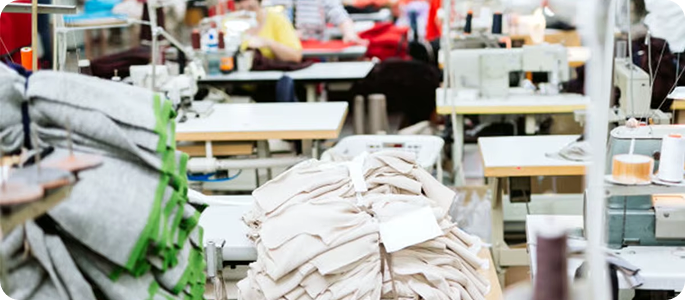
Imagine receiving a shipment of 5,000 T-shirts for a seasonal campaign. The artwork looks correct on the approved sample, but the production pieces show three different visual problems: the chest logo sits higher on small sizes, the back print moves closer to the neckline on some large sizes, and the design is slightly tilted on shirts sewn from different panels. None of these defects may stop the shirt from being worn, yet they can make a collection look unfinished and can cause a retailer to reject the shipment.
Print placement tolerance defines the acceptable distance between the approved artwork position and the position on the finished garment. It may be written as a measurement, such as ±6 mm from the approved centerline, or as a combination of measurements, such as the distance from the neckline, side seam, or armhole. The tolerance should also identify the reference point: the collar seam, shoulder seam, hem, pocket edge, or a measured body centerline.
There is no single global tolerance that applies to every OEM shirt. A large one-color front print may remain visually acceptable with a wider tolerance than a small chest logo, a pocket print, or a multi-color design requiring tight screen registration. Fabric stretch, garment construction, printing method, operator handling, and the position of the artwork all affect the practical result.
A placement difference of 5 mm may be difficult to notice on a loose back graphic, while the same difference can be obvious on a small logo intended to sit exactly 80 mm below the collar. On a 100-piece sample run, the buyer may inspect every garment. On a 10,000-piece order, the buyer may rely on sampling, photographs, and customer feedback. A small uncontrolled variation can therefore multiply into a large quality-cost problem.
Print placement affects:
For example, a buyer who approves a chest logo at 75 mm below the collar but does not specify whether the measurement begins at the collar seam or the collar edge has left the factory with two possible interpretations. The factory may follow its normal method, while the buyer compares the finished piece with a different reference point. A written measurement diagram prevents this dispute before cutting and printing begin.
The most reliable process starts with a physical or digital tech pack. The artwork file should show the print dimensions, color references, print method, garment size, placement reference, and measurement points. The buyer should then approve a pre-production sample made with the intended fabric, blank pattern, artwork scale, and production process.
A practical specification can include the following information:
| Specification item | Example requirement | Why it matters |
|---|---|---|
| Artwork size | 280 mm wide × 210 mm high | Prevents scaling changes during production |
| Horizontal position | Centered on the measured body centerline | Reduces variation caused by uneven side seams |
| Vertical position | 80 mm below the collar seam on size M | Creates a repeatable reference point |
| Placement tolerance | ±6 mm vertically and ±5 mm horizontally | Defines pass-or-fail limits |
| Color requirement | Approved Pantone reference or signed strike-off | Reduces disagreement about ink appearance |
| Inspection condition | Flat garment, normal lighting, measured before folding | Creates a consistent inspection method |
The numbers above are examples, not universal industry rules. A buyer and an OEM shirt manufacturer for custom bulk orders should select tolerances based on the artwork and production capability. A small left-chest mark may need a tighter limit than a large center-back print. If the design includes fine text, geometric borders, or a registration-sensitive multi-color image, the approval sample should demonstrate what the factory can repeatedly achieve.
One of the most common mistakes is copying the same absolute measurement onto every size. A logo placed 80 mm below the collar on size XS may look too close to the neckline on size XXL because the garment body is longer and wider. Conversely, a purely proportional rule can place the design too low on a short body.
Two methods are commonly used:
The tech pack should state which method applies to each size. It should also identify whether the garment is measured before or after washing. Cotton jersey can change dimensions after laundering, so a print that meets the pre-wash measurement may not meet the same post-wash measurement. For products sold as pre-washed or garment-dyed, the approval sample should be tested through the specified wash process before final sign-off.
Once the artwork and tolerance are approved, the factory converts the specification into production controls. The exact controls depend on whether the order uses screen printing, direct-to-garment printing, heat transfer, embroidery, or another decoration method.
In screen printing, each color is generally applied through a separate screen or printing step. When multiple colors form one image, the edges must align. This alignment is called registration. Small registration shifts can create visible halos, uneven outlines, or gaps between colors, particularly in fine lettering and sharp geometric artwork.
The factory should confirm the following before bulk production:
For a stretchable cotton or cotton-blend shirt, the fabric should be loaded consistently on the platen. If the garment is stretched differently from one cycle to the next, the printed image can appear to move or change proportion even when the screen has not moved. A factory may reduce this risk by using placement guides, fixed jigs, operator checks, and periodic measurements.
A documented inspection sequence is more dependable than a final visual check alone. A typical process includes:
Many apparel buyers use an AQL, or Acceptable Quality Limit, sampling plan for final inspection. AQL is not a guarantee that every piece is defect-free; it is a statistical sampling system used to make an acceptance decision about a lot. The buyer should state the inspection level, sample size, critical or major defect definitions, and placement tolerance before production. A print outside the agreed measurement limit may be classified as a major defect even if the ink itself is clean.
The difference becomes clear when two otherwise similar orders are compared.
| Order condition | Order with written tolerance | Order without written tolerance |
|---|---|---|
| Reference point | Collar seam and measured centerline are identified | “Center chest” is open to interpretation |
| Size grading | Each size has a fixed or graded position | One sample measurement may be copied across sizes |
| Inspection | Pass/fail limits are measurable | Approval depends on subjective judgment |
| Dispute handling | Both parties can compare results with the tech pack | Arguments may focus on photographs or personal expectations |
| Production response | Deviation can be found during inline inspection | The issue may remain hidden until final delivery |
Suppose an order contains 4,000 shirts and the agreed tolerance is ±6 mm. A measured sample shows 8 out of 80 inspected pieces outside that limit. That result does not automatically prove that all 4,000 shirts fail, but it is a clear signal to stop, investigate, and determine whether the issue comes from the platen guide, garment loading, pattern variation, or measurement method. Without a defined limit, the same eight pieces might be described as “slightly off,” leaving the buyer without an objective basis for corrective action.
Defined tolerance also improves costing. If a buyer requires a highly precise small logo, the factory may recommend a different print process, additional fixtures, slower line speed, or a larger inspection sample. Those choices can change the unit price and lead time. Agreeing on them before production is more predictable than discovering the requirements after shipment.
For a brand such as Meninthemirror, a repeatable print specification can support both first-time production and future replenishment. The brand team can keep a signed artwork sheet, a measured approval sample, a size-set record, and inspection photographs for each style. When the same design is reordered six months later, the factory can compare the new production sample with the original reference instead of relying on memory.
A useful buyer-to-factory checklist includes:
These questions turn a visual preference into a production instruction. They also make it easier for a sourcing team, factory, quality inspector, and brand manager to evaluate the same garment using the same criteria.
Print placement tolerance is a manufacturing-control issue, so it should be supported by a documented specification rather than by vague descriptions such as “perfect,” “premium,” or “highly accurate.” Relevant technical references include ISO 2859-1 for sampling procedures indexed by acceptance quality limit, ASTM D3776 for fabric mass per unit area, and AATCC TM135 for dimensional changes in home laundering. These standards do not create one universal print-placement tolerance; instead, they illustrate why sampling, material measurement, and wash testing need defined methods.
Health statistics should be treated with the same care. The frequently repeated statement that “the myopia rate among children has exceeded 60%” is incomplete without a defined population, year, sample, and measurement method. According to the publicly reported China Eye Health White Paper (2022) sample-survey wording cited by some industry materials, the incidence of myopia among children aged 6–12 reportedly increased from 53.6% in 2018 to 59.1% in 2021, with a sample described as covering 32,000 children in 27 provinces. However, this specific claim should not be presented as a universally comparable national prevalence rate without checking the original white paper, its sampling method, and its definition of “incidence.”
For comparison, China’s National Health Commission reported in its 2021 national monitoring results that the overall myopia detection rate among children and adolescents aged 6–18 was 52.7%, while the reported rate for primary-school students was 35.6%. These figures measure a different population and should not be substituted for, or merged with, the 6–12 sample-survey figure. Stating the institution, year, age range, sample description, and metric is essential—whether the subject is eye health or apparel inspection.
A shirt can have the correct fabric composition, color, size label, and artwork file and still fail the customer’s expectation if the print position is inconsistent. By setting a reference point, defining a numerical tolerance, grading the position across sizes, approving a production sample, and checking the order through an agreed sampling plan, a buyer gains a measurable path from artwork to finished product.
The value is practical: fewer interpretation disputes, earlier detection of production drift, more consistent product photography, and a clearer basis for accepting or correcting an order. Before placing the next OEM shirt order, Meninthemirror and other private-label brands can trial the process on one style, record the measurements, wash-test the approved sample where required, and use the results as the control document for bulk production.
Latest News

Trends in Premium Packaging for Wholesale Men's Shirts
For a retailer searching for a reliable men's shirts wholesale supplier, packaging is no longer an afterthought. A well-designed package can protect collars, reduce returns caused by crushing, and make a $25 shirt look appropriate for a premium store or online order. The strongest programs now combine premium packaging for wholesale men's shirts, sustainable shirt packaging wholesale, and custom
Jan. 01, 1970

Placement Print vs All-Over Print for Men's Graphic Shirts
Choosing between a placement print and an all-over design becomes difficult when a shopper is comparing the best placement print graphic shirts for men, all-over print men's shirts for streetwear, or a custom stylish printed shirt for men. A reliable men's graphic shirt supplier must explain more than appearance: screen printing affects ink thickness, sublimation printing affects color
Jan. 01, 1970

Stock Fabric vs Custom-Dyed Fabric for Private Label T-Shirts
For a t shirt manufacturer private label project, the choice between stock fabric and custom-dyed fabric affects more than color. It influences minimum order quantity, production speed, shade consistency, fabric performance, cash flow, and the success of future reorders. Meninthemirror helps brands evaluate these factors before committing to a fabric program.
Jan. 01, 1970
Let's Take This Forward!
Feel free to reach out for any queries. We would be happy to help!

