





Jan. 01, 1970
For a brand trying to launch responsibly, a private label clothing factory is no longer judged only by price, minimum order quantity, or sewing capacity. Buyers now ask where the cotton was grown, whether recycled polyester is genuinely recycled, and whether a claim can survive a retailer audit. This guide explains traceable fabric sourcing for private label t-shirts, how to select a sustainable private label t-shirt manufacturer, and how to manage an organic cotton t-shirt supply chain using chain of custody, transaction certificates, and life cycle assessment data. The goal is a commercially workable product, not a vague sustainability story.

Private label buyers face a practical problem: the garment may be cut and sewn in one country, spun and knitted in another, dyed at a separate mill, and made from fibers sourced through several traders. A supplier’s statement such as “eco-friendly cotton” does not identify the farm, the certification scope, the percentage of certified material, or the documents supporting the claim.
Traceability creates a documented path from raw material to finished garment. For a T-shirt, that path can include:
According to Textile Exchange’s Materials Market Report 2024, global fiber production reached approximately 124 million tonnes in 2023 and is projected to reach about 160 million tonnes by 2030 if current growth patterns continue. The figures show why material selection alone is not enough: brands need evidence of what was purchased, how much entered production, and whether the finished product matches the original claim.
A product description can say “made with organic cotton,” but a compliance file should answer four measurable questions:
For example, the Global Organic Textile Standard, commonly known as GOTS, covers organic fibers and includes environmental and social criteria across processing. However, a factory’s general statement that it “works with GOTS” does not automatically mean every T-shirt is GOTS-certified. The buyer should check the certificate holder, scope, product category, validity period, and transaction documentation.
Regulation is moving the industry from voluntary storytelling toward product-level information. The European Union’s Ecodesign for Sustainable Products Regulation entered into force on July 18, 2024. Its framework allows product-specific requirements and digital product passports, with textiles and footwear identified as priority areas in the European Commission’s working plans.
The exact data requirements and dates depend on later delegated acts, so a supplier should not promise that one QR code will satisfy every future rule. Nevertheless, private label brands selling in Europe should begin organizing:
A digital product passport can be useful, but it is only as reliable as the underlying records. A QR code that opens a generic sustainability page is not equivalent to batch-level traceability.
Retailers increasingly request evidence before accepting environmental claims. In the United States, the Federal Trade Commission’s Green Guides caution businesses against broad, unqualified claims such as “green” or “eco-friendly” when the overall environmental benefit cannot be substantiated. In the United Kingdom, the Competition and Markets Authority’s Green Claims Code similarly emphasizes that claims should be truthful, clear, and supported by evidence.
This affects T-shirt buyers in three ways:
Traceability is also a procurement and risk-management issue. Cotton prices, energy costs, freight rates, dye chemicals, and currency movements can change the final price of a basic T-shirt. A lower quoted price may conceal weaker documentation, unauthorized substitution, or a fabric lot that cannot be replenished.
A traceable sourcing plan helps a buyer compare suppliers on more than FOB price. The comparison should include fabric cost, certification fees, testing, inspection, documentation, lead time, minimum order quantity, and the expected cost of a rejected or delayed shipment.
Organic cotton is moving from a fiber preference to a documentation requirement. Buyers increasingly want to know whether cotton was certified at the farm stage and whether it remained identifiable through ginning, spinning, knitting, dyeing, and garment production.
GOTS and the Organic Content Standard are not interchangeable. GOTS includes organic fiber requirements plus processing and social criteria, while OCS primarily verifies the presence and amount of organic material through the supply chain. A brand should select the standard according to its claim and market requirements.
A practical purchase file for an organic cotton T-shirt may contain:
The Textile Exchange’s Organic Cotton Market Report 2023 reported that organic cotton accounted for approximately 1.4% of global cotton production in the 2021/22 harvest year. This relatively small share makes availability, allocation, and replenishment planning important. A brand should reserve certified material before finalizing a launch calendar rather than assume that any factory can buy it immediately.
Recycled polyester, recycled cotton, recycled nylon, and regenerated cellulosic fibers are appearing in more private label collections. The central issue is not simply whether the material is recycled; it is how the recycled input is defined and verified.
For mechanically recycled material, suppliers should identify the pre-consumer or post-consumer source, processing method, and percentage in the final fabric. For chemically recycled materials, the buyer should ask whether the relevant certification uses physical segregation or a controlled mass-balance system.
Mass balance means certified input is tracked through a controlled production system, although certified and non-certified molecules may be processed together. It is different from physical segregation, where certified material remains physically separate. Neither approach should be described inaccurately. The product label and sales copy should follow the applicable certification rules.
Useful checks include:
Digital traceability is becoming more practical as suppliers replace spreadsheets with shared platforms, barcode systems, and QR-coded batches. A QR code can connect a finished T-shirt to information such as fiber composition, factory location, care instructions, repair guidance, and certification documents.
However, technology does not correct inaccurate inputs. Before adopting a platform, a buyer should test whether it can:
Blockchain may be used in some systems, but a blockchain label alone does not prove that the original data was accurate. The stronger control is an auditable process combining supplier verification, document review, physical testing, and production reconciliation.
Traceability is expanding beyond fiber origin. Dyeing and finishing can influence water use, chemical exposure, colorfastness, and wastewater quality. Buyers therefore request wastewater test reports, chemical inventories, restricted-substance declarations, and facility environmental records.
The ZDHC Foundation’s ZDHC MRSL is widely used as a restricted-substances reference for textile chemical inputs. It is important to distinguish chemical-input conformance from wastewater performance: a chemical supplier’s MRSL conformance does not by itself prove that a dye house has achieved a particular wastewater result.
For a private label T-shirt, measurable specifications may include:
Brands are using life cycle assessment to compare materials, but LCA results must be read carefully. Results depend on system boundaries, agricultural assumptions, electricity mix, transport, product lifetime, and end-of-life treatment. A fabric cannot be declared universally “the most sustainable” without defining the comparison method.
The International Organization for Standardization’s ISO 14040 and ISO 14044 provide principles and requirements for life cycle assessment. A product-level LCA should therefore disclose what stages were included, whether the result is cradle-to-gate or cradle-to-grave, and which data sources were used.
For buyers, durability may be as commercially relevant as fiber choice. A T-shirt that survives 50 home wash cycles with acceptable appearance may deliver more usable wears than a cheaper shirt that loses shape after 15 cycles. The buyer should request a defined wash-testing protocol instead of relying on the adjective “durable.”
Start with a technical brief rather than a mood board alone. State the target market, delivery country, fabric composition, fabric weight, color range, size range, print or embroidery method, packaging, testing requirements, certification claim, target cost, and launch quantity.
A clear brief might specify:
This prevents a common failure: the buyer requests “sustainable cotton,” while the factory quotes three different materials with different certification and price structures.
Do not evaluate only the sewing facility. A cut-and-sew factory may have limited control over the spinning mill, knitting mill, dye house, printer, or laundry. Ask for the approved supplier list and identify which stages are subcontracted.
Review:
Meninthemirror, for example, can be assessed through the same transparent framework: confirm the material specification, identify the production stages, request relevant certificates, approve a sample, and require batch documentation before shipment. The brand name should support a documented process rather than replace one.
A scope certificate generally confirms that a facility is approved to handle certain materials or processes during a defined period. A transaction certificate links a specific shipment or quantity to the standard. Both may be needed, depending on the certification system and claim.
Use a simple reconciliation calculation:
Certified material used = opening certified stock + certified purchases − closing certified stock − documented waste or transfers.
If a supplier claims that 10,000 kilograms of certified cotton were used but can document only 6,500 kilograms of certified purchases, the buyer should pause approval and investigate. The difference may be explained by opening inventory, but that inventory also needs evidence.
Request a lab-dip, handloom sample, or development roll before approving bulk fabric. Test or verify:
For example, if the approved specification is 180 GSM and the agreed tolerance is ±5%, the acceptable range is 171 to 189 GSM. Writing the range into the purchase order is more useful than describing the fabric as “heavyweight.”
Material substitutions often occur when a certified yarn is delayed or a color fails. The buyer should require written approval before changing the yarn, mill, dye house, fabric composition, printing ink, or packaging.
A change-control form should record:
Certified yarns and fabrics may require a larger commitment than standard stock. The actual effect depends on fiber, certification, color, fabric weight, supplier inventory, and order size. Instead of asking whether traceability is “expensive,” request a line-item quotation covering:
This makes it possible to compare a 500-piece pilot order with a 5,000-piece production order without confusing fabric cost and compliance cost.
Traceable materials can add approval stages. A realistic schedule should separate development, certificate verification, yarn or fabric booking, lab dips, bulk production, inspection, and shipment.
For a new private label T-shirt, build a written calendar with decision gates:
Maintaining a reserve of approved yarn or greige fabric can reduce replenishment risk, but the inventory must remain correctly identified and documented.
Traceability does not automatically justify a higher retail price. Buyers still need a clear product benefit: reliable fit, verified material, lower claim risk, consistent replenishment, or retailer acceptance. Product pages should state the verified fact and avoid unsupported conclusions.
Prefer:
Avoid:
Problem: The certificate belongs to the facility but does not prove that the fabric for the buyer’s order used certified material.
Solution: Request the certificate scope, transaction certificate where applicable, purchase records, lot numbers, and production reconciliation. If the documents cannot be linked, narrow the product claim or change the material program.
Problem: A substitute mill may change the certification status, hand feel, shade, shrinkage, or chemical profile.
Solution: Add a no-substitution clause to the purchase order. Require written approval, a replacement sample, updated certificates, and new testing before production continues.
Problem: A consumer-facing page may list a country and fiber type without showing a verifiable document trail.
Solution: Store auditable evidence behind the QR code, including batch ID, fiber composition, certification references, production stage records, and document issue dates. Keep confidential supplier prices hidden while preserving audit access.
Problem: Small brands may not meet a mill’s minimum order quantity for custom colors or certified yarn.
Solution: Start with stock-supported colors, select a fabric already in the manufacturer’s approved library, combine color quantities where permitted, or use a pilot order to validate demand before custom development. Confirm that stock fabric is still within certificate validity and has complete transaction records.
Problem: A label may claim “organic,” “recycled,” or “low-impact” even though only one component or one stage has been verified.
Solution: Map each claim to a document. If the evidence supports only the fiber content, write a fiber-content claim. If it supports processing requirements as well, state the applicable certification accurately. Have legal or compliance staff review claims in each sales market.
Before placing a bulk order, buyers should be able to answer “yes” to most of the following questions:
For Meninthemirror or any private label apparel brand, the strongest customer experience is a short, specific evidence trail. A product page can identify the T-shirt style, fiber percentage, certification standard, production batch, care instructions, and verified factory stage without making an absolute environmental claim.
A practical presentation might include:
This format helps buyers, retailers, and consumers understand what has been measured. It also gives the manufacturer a repeatable system for future collections rather than a one-time campaign.
Traceable fabric sourcing is becoming a basic operating requirement for private label T-shirts because regulation, retailer audits, material volatility, and customer scrutiny now meet at the same point: evidence. The most reliable approach combines a documented organic cotton t-shirt supply chain, accurate recycled-content verification, a practical digital product passport plan, and disciplined chain-of-custody controls. Buyers should compare suppliers by certificates, transaction records, test results, quantity reconciliation, change control, and replenishment capability—not by sustainability adjectives alone. Whether the partner is Meninthemirror or another t shirt manufacturer private label program, the winning process is measurable from fiber purchase to finished carton and clear about what each claim does and does not prove.
Latest News

Leisure Collar Shirt Fit Review: Balance, Drop, and Mobility
When a customer needs a leisure collar shirt supplier for office-casual wear, travel, or weekend use, the real problem is rarely color alone: the shirt must fit the neck without choking, sit cleanly across the shoulders, and allow reaching without pulling at the buttons. This review examines a leisure collar long sleeve shirt for men through three practical measures—collar stand, shoulder seam
Jan. 01, 1970
Pros and Cons of Baroque Prints for Premium Men's Collections
A custom baroque shirt manufacturer has to solve more than a visual brief: buyers need custom baroque print shirts for premium men’s collections that look distinctive without becoming difficult to wear, while brands need private-label baroque shirts for men with repeatable quality and luxury custom baroque shirts that survive production and retail handling. Baroque and rococo motifs, silk
Jan. 01, 1970
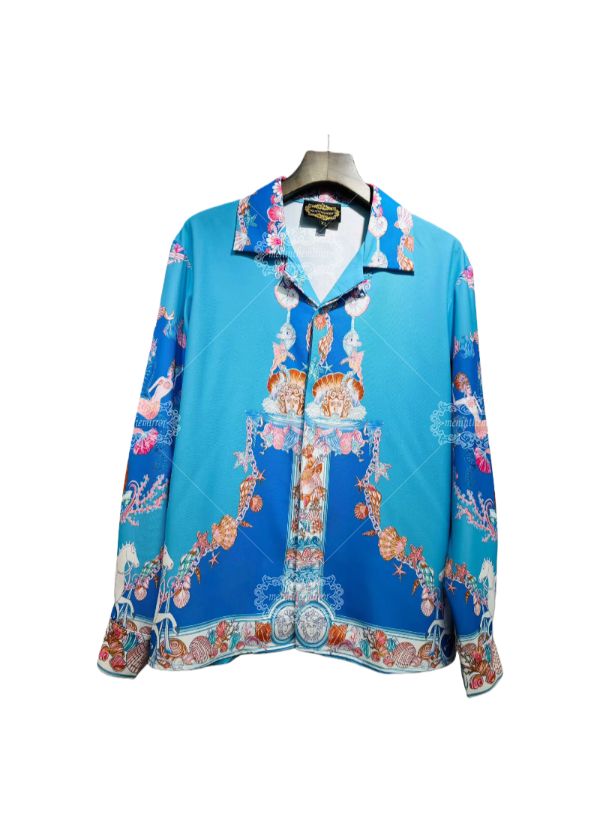
Top Packaging Details to Confirm for Export Shirt Orders
For an export shirt supplier, packaging is no longer a final warehouse task; it is part of the buyer’s quality specification. Retailers now expect custom export shirt packaging to protect collars, control freight volume, and meet destination-market rules, while a wholesale shirt packaging requirements checklist helps prevent chargebacks and customs delays. Before approving a purchase order,
Jan. 01, 1970
Let's Take This Forward!
Feel free to reach out for any queries. We would be happy to help!

