





Jan. 01, 1970
Wholesale printed men's shirts are men’s shirts purchased in bulk and decorated with graphics, logos, patterns, or artwork before delivery. Their unit price is the cost of one finished shirt and is mainly determined by fabric, garment construction, printing technology, order quantity, labor, packaging, testing, and shipping terms. For businesses, understanding these cost drivers helps buyers compare supplier quotations, protect profit margins, and select the right product specification instead of choosing only the lowest price.
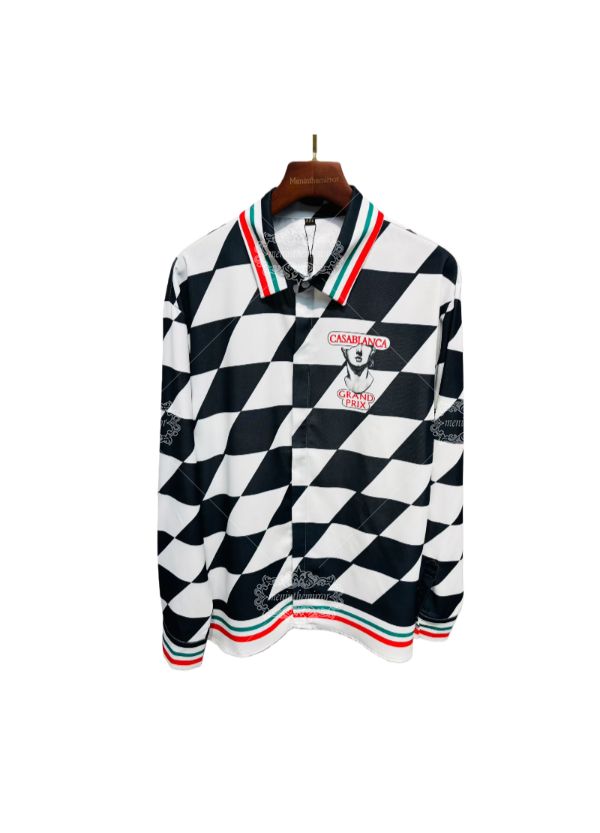
In the apparel industry, the quoted unit price is rarely just the cost of a blank T-shirt plus a simple print. It is a combined manufacturing calculation covering materials, conversion costs, quality control, and commercial terms.
For a retailer, promotional company, fashion label, or e-commerce seller, even a difference of $0.50 per shirt can significantly affect profitability. An order of 5,000 pieces would create a $2,500 difference before freight, duties, and marketplace fees.
Meninthemirror buyers and similar wholesale customers should therefore request a detailed quotation that identifies:
Fabric is usually one of the largest components of the garment cost. A 100% combed cotton shirt normally costs more than a basic open-end cotton shirt because combing removes short fibers and improves softness, strength, and surface appearance.
Common fabric specifications include:
| Fabric specification | Typical commercial effect | Practical application |
|---|---|---|
| 100% cotton, 160–180 GSM | Moderate cost | Retail basics and promotional apparel |
| Combed or ring-spun cotton | Higher cost | Soft-hand fashion collections |
| Organic cotton | Higher material and certification cost | Sustainable and premium product lines |
| Cotton-polyester blend | Varies by ratio and performance finish | Sportswear and easy-care garments |
GSM means grams per square meter. A higher GSM generally indicates a heavier fabric, but it does not automatically guarantee better quality. Fiber length, yarn count, knitting gauge, dyeing consistency, and finishing treatment also influence the final price.
The manufacturing cost increases when a shirt requires more components or more sewing operations. A standard crew-neck T-shirt has a relatively simple operation sequence. A fashion shirt may include a ribbed collar, shoulder tape, side panels, patch pockets, contrast sleeves, curved hems, or reinforced seams.
Important construction variables include:
A basic printed crew-neck may require fewer sewing minutes than an oversized drop-shoulder shirt with a heavyweight collar and garment wash. This difference is reflected in the standard minute value, or SMV, used by apparel factories to estimate labor and production capacity.
Printing is a major cost variable in wholesale printed shirts. The most suitable process depends on the artwork, fabric, order size, color count, durability requirement, and desired hand feel.
| Printing method | Cost behavior | Best suited for |
|---|---|---|
| Screen printing | Economical at high volume; screen setup adds an initial charge | Bold graphics and limited-color artwork |
| Direct-to-garment, or DTG | Lower setup cost but slower for large runs | Detailed, full-color, short-run designs |
| Direct-to-film, or DTF | Flexible for small and medium batches | Complex graphics and vivid transfers |
| Heat transfer vinyl | Cost depends on cutting and weeding time | Names, numbers, and simple lettering |
| Embroidery | Based on stitch count and number of locations | Premium logos and workwear decoration |
For example, a one-color screen print measuring 250 × 300 mm can be much less expensive than a four-color front-and-back print. Larger print areas consume more ink or transfer film and may require additional curing time. Metallic, fluorescent, puff, discharge, silicone, and reflective inks also add specialized process costs.
Order volume has a direct effect on unit cost. Fixed costs such as artwork preparation, screen making, sampling, machine setup, and quality documentation are distributed across the total quantity.
Consider this simplified example:
| Cost item | 500 shirts | 5,000 shirts |
|---|---|---|
| Artwork and screen setup | $0.80 per shirt | $0.08 per shirt |
| Shirt and printing conversion | $5.20 per shirt | $4.35 per shirt |
| Packaging and inspection | $0.35 per shirt | $0.25 per shirt |
| Illustrative factory price | $6.35 per shirt | $4.68 per shirt |
This is an example rather than a universal market quotation. Actual pricing depends on fabric markets, country of manufacture, payment terms, and product specifications. However, it demonstrates why a supplier may offer a lower unit price for large-volume wholesale printed shirts.
Extended sizing can increase fabric consumption, marker usage, cutting waste, and packing complexity. A quotation based only on sizes S–XL may not remain valid when the order includes 2XL–5XL.
Likewise, multiple colorways can create separate dye-lot, cutting, printing, and inspection requirements. Buyers should clarify whether the minimum order quantity applies to:
Higher quality assurance increases production discipline and may add testing expenses, but it reduces the risk of returns, chargebacks, and customer complaints. A professional supplier should define measurable quality criteria rather than use vague terms such as “premium” or “export quality.”
Depending on the product and destination market, buyers may request:
For production control, the supplier may use an AQL inspection system, such as AQL 2.5 for major defects and AQL 4.0 for minor defects. Some manufacturers also perform 100% inspection of print placement, garment color, size labeling, and obvious sewing defects before packing. These controls can affect the unit price, but they provide stronger shipment consistency.
Individual polybags, recycled packaging, barcode stickers, folded presentation, carton markings, and custom inserts all influence the landed cost. A shirt with a woven neck label and branded hangtag requires additional materials and labor compared with a blank stock label.
Destination-market compliance may also require fiber-content labeling, country-of-origin marking, flammability documentation, restricted-substance testing, or packaging regulations. These requirements should be confirmed before production rather than added after goods are packed.
A factory price is not the same as a landed cost. Buyers should distinguish among:
Currency exchange rates, port congestion, fuel surcharges, import duty, value-added tax, and payment terms can all change the final cost. A 30% deposit and 70% balance arrangement may be priced differently from open-account or letter-of-credit terms because of financing and risk exposure.
A low price may indicate lighter GSM, lower-grade yarn, fewer inspection steps, reduced print coverage, or an excluded freight charge. Compare quotations using the same technical specification and Incoterm.
Price alone does not prove quality. A higher quote could result from inefficient production, a small order quantity, expensive packaging, or unnecessary embellishments. Ask for fabric test data, pre-production samples, and a written inspection standard.
Screen printing cost changes according to the number of screens, ink type, print locations, artwork dimensions, registration difficulty, and curing requirements. A six-color back print is not commercially equivalent to a one-color chest logo.
Sampling normally includes pattern development, courier charges, setup, and extra handling. The bulk quotation should be requested after the sample is approved and the final bill of materials is confirmed.
A structured sourcing process helps control both price and product risk. The following workflow is practical for retailers and brands ordering Printed men shirt wholesale products:
Suppose Meninthemirror needs 3,000 black cotton shirts with a front graphic. Supplier A quotes $3.95 per piece, while Supplier B quotes $4.35 per piece.
At first glance, Supplier A appears to save $1,200. However, further review shows that Supplier A uses 160 GSM open-end cotton, includes no independent inspection, and quotes EXW. Supplier B uses 180 GSM ring-spun cotton, includes a 100% visual print inspection, and quotes FOB with AQL documentation.
If Supplier A requires $0.25 per shirt for inland collection, $0.15 for additional inspection, and produces a 3% defect rate, the apparent saving may shrink substantially. Supplier B may provide a lower total cost of ownership even though its nominal unit price is higher.
The correct decision depends on the buyer’s sales channel. Promotional giveaways may prioritize price and delivery speed, while a branded retail collection may prioritize colorfastness, hand feel, dimensional stability, and consistent print adhesion.
The unit price of wholesale printed men's shirts is determined by a combination of fabric, GSM, garment construction, decoration method, artwork complexity, quantity, sizing, quality assurance, packaging, logistics, and commercial terms. The most reliable way to compare suppliers is to use one detailed technical specification, confirm testing and inspection requirements, and calculate the full landed cost.
For Meninthemirror and other apparel buyers, a transparent quotation and approved pre-production sample provide a stronger foundation than a headline price alone. By evaluating wholesale printed shirts through measurable standards such as AATCC, ASTM, ISO, and AQL inspection criteria, buyers can reduce quality risk while protecting their target margin.
Latest News

Trends in Premium Packaging for Wholesale Men's Shirts
For a retailer searching for a reliable men's shirts wholesale supplier, packaging is no longer an afterthought. A well-designed package can protect collars, reduce returns caused by crushing, and make a $25 shirt look appropriate for a premium store or online order. The strongest programs now combine premium packaging for wholesale men's shirts, sustainable shirt packaging wholesale, and custom
Jan. 01, 1970

Placement Print vs All-Over Print for Men's Graphic Shirts
Choosing between a placement print and an all-over design becomes difficult when a shopper is comparing the best placement print graphic shirts for men, all-over print men's shirts for streetwear, or a custom stylish printed shirt for men. A reliable men's graphic shirt supplier must explain more than appearance: screen printing affects ink thickness, sublimation printing affects color
Jan. 01, 1970

Stock Fabric vs Custom-Dyed Fabric for Private Label T-Shirts
For a t shirt manufacturer private label project, the choice between stock fabric and custom-dyed fabric affects more than color. It influences minimum order quantity, production speed, shade consistency, fabric performance, cash flow, and the success of future reorders. Meninthemirror helps brands evaluate these factors before committing to a fabric program.
Jan. 01, 1970
Let's Take This Forward!
Feel free to reach out for any queries. We would be happy to help!

