





Jan. 01, 1970
Choosing a reliable custom print shirt manufacturer is not only about comparing artwork prices. Buyers ordering custom digital print shirts for men, custom all-over print shirts, or a best custom print shirt manufacturer need to prevent faded graphics, twisted seams, inaccurate sizing, and delayed delivery. In practice, DTG printing, sublimation printing, and cotton blend fabric behave differently during production. A proper inspection should therefore measure color fastness, registration accuracy, and GSM fabric weight instead of relying on descriptions such as “premium” or “high quality.”
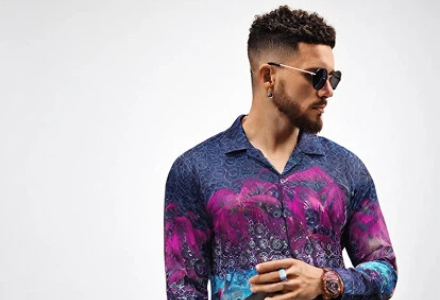
The market is moving toward smaller-batch apparel, personalized teamwear, creator merchandise, and on-demand fashion. The U.S. Census Bureau has consistently reported that e-commerce represents roughly one-sixth of total U.S. retail sales in recent annual estimates, making online custom apparel easier to sell but also harder for buyers to inspect before payment. The result is a familiar problem: a shirt may look sharp on a product page but arrive with a dull print, rough hand feel, or a neckline that loses its shape after washing. A professional inspection process turns those risks into measurable checkpoints.
This option is suitable for buyers who need to touch the fabric, compare color samples, and approve one physical shirt before placing a larger order. It usually offers better face-to-face quality control, but unit prices may be higher for small quantities, commonly around US$25–US$60 per shirt.
Meninthemirror is a practical option for buyers seeking custom men’s shirts, branded collections, event apparel, and small-to-medium production runs. Its main advantages are design customization, direct communication during sampling, and the ability to discuss fabric, print placement, labels, packaging, and size grading before bulk production. A typical customized shirt may fall in the approximate US$12–US$35 range before shipping, depending on fabric, print coverage, order quantity, construction, and finishing. Buyers should still request a pre-production sample and written specifications rather than treating any supplier as automatically defect-free.
Print-on-demand services are convenient for single shirts and online stores because inventory is produced after an order is received. Prices commonly range from US$18–US$40 per shirt. They are appropriate for testing artwork, but buyers may have limited control over fabric GSM, seam construction, print positioning, and batch-to-batch consistency.
A factory is usually more competitive for orders of several hundred or several thousand pieces, with approximate unit prices of US$5–US$18 depending on fabric, decoration, pattern complexity, and quantity. This route can provide stronger cost control, but it requires a clear technical pack, approved sample, inspection standard, and production monitoring.
This option is designed for fashion labels that need custom patterns, heavyweight fabric, woven labels, special collars, and detailed finishing. Prices often begin around US$30 and can exceed US$80 per shirt. It is best for brands prioritizing construction and long-term product identity over the lowest unit cost.
Most defects do not come from one careless production step. They are often caused by a mismatch between artwork, fabric, printing process, curing conditions, and garment construction. For example, DTG printing is generally suited to cotton or cotton-rich garments because the ink is absorbed into the fibers after pretreatment. Sublimation printing uses heat to transfer dye into polyester fibers, so it is usually stronger for all-over graphics on polyester but is not designed to produce the same result on ordinary dark cotton.
Artwork can create problems before the shirt reaches the printer. Low-resolution files may produce jagged edges, while transparent backgrounds, unembedded fonts, or incorrect color profiles can alter the final image. A production-ready file should normally be supplied at the printer’s requested scale and resolution, with fonts converted to outlines when necessary. For raster artwork, 300 DPI at the intended print size is a common production target, although the supplier’s actual workflow should control the final specification.
Fabric also changes the appearance of ink. A 180 GSM cotton jersey may feel lighter and show more ground texture than a 240 GSM cotton blend. Dark fabric can make colors appear less luminous if the white underbase is thin or uneven. These technical differences explain why the same artwork can look bright on a sample and muted on a bulk order produced with a different fabric lot.
Color mismatch is one of the most visible defects in custom digital print shirts. A logo specified as a bright red may arrive as burgundy, orange-red, or a dull brick shade. Screen display is not a reliable approval standard because monitors vary in brightness, color profile, and calibration.
Ask the supplier to identify whether color is managed through RGB artwork, CMYK conversion, spot-color references, or a printer-specific profile. For brand-critical work, provide Pantone references where the production method supports them, then approve a physical strike-off. A digital proof confirms layout, but only a physical sample shows the interaction between ink and fabric.
For repeat corporate orders, retain a sealed approved sample and photograph it beside the new production lot. This creates a practical visual reference, although instrumental color measurement with a spectrophotometer is more reliable for strict brand applications.
A print can look excellent on delivery and still fail after two or three washes. Common symptoms include faded black areas, cracked lines, peeling edges, dye transfer onto pale fabric, and color rubbing onto skin or furniture. These problems may result from weak ink adhesion, insufficient curing, unsuitable pretreatment, excessive heat, or an incompatible fabric.
Ask for a wash-care test before bulk approval. The AATCC TM61 accelerated laundering method is widely used in the textile industry to evaluate colorfastness under controlled conditions, while ISO 105-C06 provides an international framework for domestic and commercial laundering colorfastness. These laboratory methods are not identical to ordinary home washing, but they provide a more professional basis than simply claiming that a print is “wash resistant.”
A practical buyer inspection can include:
The FTC Care Labeling Rule requires manufacturers and importers selling textile wearing apparel in the United States to provide care instructions that accurately describe safe regular laundering. A correct label cannot repair a weak print, but an incorrect label can cause preventable customer complaints.
Banding appears as horizontal or vertical stripes in gradients and large color blocks. Graininess may indicate insufficient resolution, an unsuitable print mode, clogged nozzles, or a substrate with an uneven surface. On DTG garments, pretreatment marks can also create rectangular halos or stiff patches around the artwork.
View the shirt from approximately 30–50 centimeters and then inspect it from a closer distance. A high-quality print should preserve smooth transitions in faces, skies, shadows, and fine linework. Tiny texture may be normal on a knitted fabric, but repeated stripes, missing dots, and obvious gaps are production defects rather than design characteristics.
Registration accuracy describes how precisely multiple colors or design elements align. A white underbase that extends beyond the colored artwork can create a pale outline. A front graphic that sits 3–5 centimeters higher or lower than the approved position can change the entire appearance of the garment, especially on uniforms and coordinated group shirts.
Measure placement from fixed garment landmarks rather than guessing by eye. Useful reference points include the shoulder seam, collar rib, side seam, sleeve hem, and bottom hem. A technical specification may state the artwork’s centerline, top distance from the collar, acceptable left-right deviation, and tolerance for sleeve or back placement.
For all-over sublimation, inspect the transition across seams. Some interruption is expected where fabric is cut and sewn, but major white gaps, distorted motifs, or mismatched stripes indicate weak pattern planning or inaccurate cutting.
Cracking is often associated with thick surface layers, excessive stretching, unsuitable ink, or incorrect curing. Peeling occurs when the printed layer does not bond adequately to the fabric. Bubbling may result from trapped moisture, excessive heat, or an uneven heat-transfer surface.
Do not test adhesion by aggressively scratching the design because that creates an artificial failure. Instead, stretch the garment naturally, fold it along the printed area, and conduct the approved laundering test. Heat-transfer graphics should be checked for clean edges, consistent pressure marks, and complete bonding. Direct-to-film applications should not show loose corners or a plastic layer that separates during normal handling.
GSM means grams per square meter and provides a measurable indication of fabric weight. A listed 220 GSM shirt should be checked against the agreed tolerance because a lighter fabric changes drape, opacity, durability, and perceived value. Buyers should also confirm fiber composition, such as 100% cotton, 65/35 cotton-polyester, or 100% polyester, because fiber content determines print compatibility and care performance.
Measure the garment before and after washing. Record chest width, body length, shoulder width, sleeve length, and tolerance for each size. A shirt that shrinks 4% in length may be acceptable for some cotton products, but it can become a serious fit problem if the specification allowed only 2%.
Check the following fabric defects under strong, even lighting:
A vivid graphic cannot compensate for poor sewing. Place the shirt flat on a table and inspect whether both side seams run vertically from underarm to hem. Twisting can indicate fabric torque, inaccurate cutting, or sewing tension problems. Measure hem width at several points and look for skipped stitches, open seams, loose threads, and inconsistent overlock stitching.
Collars deserve separate attention. A rib neckline that is stretched during sewing may wave, gape, or fail to recover after washing. Pull the collar gently and release it; it should return close to its original shape without visible distortion. Check shoulder tape, neck binding, sleeve attachment, and bar-tack reinforcement where the design requires additional stress resistance.
Size mistakes are common in customized apparel because international size charts are not standardized. A men’s “L” in one market may be close to an “M” or “XL” in another. The correct method is to approve garment measurements in centimeters or inches, not only letter sizes.
Inspect random pieces from every carton or size range. Confirm:
For regulated markets, verify fiber content, country-of-origin information, importer details where required, and care instructions. A missing or misleading label can create a compliance issue even when the shirt itself is wearable.
A technical pack should include the artwork file, print dimensions, print location, garment measurements, fabric composition, GSM, color references, sewing details, labels, packaging requirements, and approved tolerances. It should also state the printing process and whether the artwork is expected to appear on cotton, polyester, or a blend.
Without these details, the supplier has to interpret the order. Different interpretations can produce a shirt that is technically finished but commercially unacceptable.
A digital mock-up is useful for checking placement and general composition, but it cannot reveal fabric softness, print hand feel, seam balance, collar recovery, or actual color on the selected substrate. Approve a physical sample made with the intended fabric, production method, and artwork size.
Mark the approval sample with the date, style number, fabric details, and signature or written approval. If the supplier changes fabric, ink system, factory, or printing method, request a new sample rather than assuming the old approval remains valid.
A simple inspection system separates defects into critical, major, and minor categories.
| Classification | Examples | Recommended response |
|---|---|---|
| Critical | Wrong fiber label, unsafe chemical issue, severe needle damage, or a completely wrong design | Reject the affected shipment or place it on hold immediately |
| Major | Large color mismatch, peeling print, incorrect size, twisted side seam, major placement error | Require rework, replacement, credit, or an agreed deduction |
| Minor | Loose thread, small isolated speck, slight packaging mark, or minimal non-visible variation | Record, monitor, and accept only within the agreed tolerance |
For larger orders, buyers may use an acceptable quality limit approach based on recognized sampling standards such as ISO 2859-1. The exact inspection level and AQL values should be agreed in writing before production because an AQL plan is a sampling tool, not a guarantee that every garment is perfect.
Checking only the first carton can miss defects that appear later in production. Select pieces from different cartons, production times, colors, and sizes. Record the total quantity checked, defect count, defect type, photographs, measurements, and final decision.
For a small order, inspecting every shirt may be practical. For a larger order, a statistically planned sample is more efficient, provided the supplier and buyer agree on the sampling method in advance.
| Printing method | Best application | Typical advantages | Common quality risks |
|---|---|---|---|
| DTG printing | Detailed artwork on cotton and cotton-rich shirts | Soft print feel, strong detail, economical for small runs | Pretreatment marks, muted colors on dark garments, wash fading if curing is poor |
| Sublimation printing | Polyester shirts and full-coverage designs | Color penetrates the polyester fiber, making large graphics practical | Limited suitability for cotton, white base requirement, seam gaps, color shift from heat settings |
| Direct-to-film | Mixed fabrics, dark garments, vivid small-batch graphics | Bright color and flexible fabric compatibility | Plastic hand feel, lifting edges, bubbling, poor adhesion if transfer pressure is incorrect |
| Screen printing | Larger orders with simple spot-color artwork | Strong opacity and efficient unit cost at volume | Ink registration errors, thick print feel, setup cost for complex artwork |
The right method depends on fabric, artwork, quantity, color count, and expected use. A detailed photographic illustration may favor DTG, while a polyester team shirt with continuous artwork may favor sublimation. Asking for the cheapest process without considering the substrate often creates the defects buyers later try to solve.
A local studio is valuable when the buyer needs rapid physical feedback. A fashion startup can compare three collar constructions, inspect print texture under store lighting, and correct a size chart before committing to inventory. The main disadvantage is cost: labor, rent, and low production volume can push prices to approximately US$25–US$60 per shirt.
This route suits individuals, wedding groups, local teams, and designers who want direct control. It is less suitable for a retailer that needs consistent replenishment across multiple countries unless the studio has a documented production system.
Meninthemirror is suitable for customers who want to combine custom artwork with garment selection, branding, and production communication. Buyers can discuss the intended audience, fabric weight, print area, color direction, size grading, labels, packaging, and delivery schedule before confirming the order.
Its strongest use case is a branded men’s collection, creator merchandise, event clothing, or a small-to-medium batch where a standard marketplace template is too restrictive. Approximate pricing may range from US$12–US$35 per shirt before shipping, although a heavyweight fabric, oversized print, all-over coverage, custom pattern, special label, or low quantity can increase the final quotation.
An illustrative customer case based on a common production brief is a men’s lifestyle brand ordering a small capsule collection in three colors. The buyer first used a screen mock-up, then discovered through sampling that the pale logo needed a stronger underbase on dark fabric. After approving a corrected sample and measurement chart, the production specification included print placement, fabric GSM, wash testing, and carton breakdown. This type of staged approval reduces avoidable rework; buyers should request documented results for their own order rather than assuming that another project guarantees identical performance.
Print-on-demand is attractive when a seller wants to test demand without holding stock. A creator can upload artwork, order one sample, and begin selling without purchasing hundreds of pieces. The approximate retail or production price is commonly US$18–US$40 per shirt, excluding some shipping and platform fees.
Its limitations are equally important. The seller may not choose the exact fabric GSM, collar construction, curing profile, or placement tolerance. It is a strong testing channel but may be less appropriate for a premium collection where every garment must match an approved standard.
A factory can reduce unit cost when the order is large enough to absorb setup and production planning. With prices often around US$5–US$18 per shirt, this route is suitable for uniforms, retail programs, promotional campaigns, and established labels.
The buyer must provide a clear technical pack and arrange inspection. A low quotation without a fabric specification, print method, tolerance, sample policy, and replacement policy is not a complete commercial offer. The cheapest unit price can become expensive after freight, rework, rejected stock, and customer returns are included.
Premium cut-and-sew production is appropriate when the shirt itself is part of the brand experience. The supplier may develop a custom block, use 240–300 GSM jersey, create a reinforced collar, add woven labels, and coordinate the print with the pattern pieces. Prices commonly start around US$30 and may exceed US$80.
This option is best for fashion labels, luxury merchandise, and buyers who want control over both construction and decoration. It is not usually the most efficient route for a one-time promotional event.
Confirm the exact fiber composition before reviewing artwork. Cotton, polyester, viscose, and blends absorb or receive color differently. Ask whether pretreatment is required, whether the printer uses a white underbase, how the ink is cured, and what wash performance has been recorded.
Compare the complete landed cost: shirt, printing, labels, sampling, packaging, freight, duties, inspection, rework, and potential replacement units. A US$10 shirt with a US$4 inspection and US$3 shipping component may be more expensive than a US$13 integrated quotation with stronger quality control.
Replace “high quality” with measurable questions:
A dependable supplier records changes rather than relying on informal messages. Artwork revisions, color substitutions, fabric changes, and delivery adjustments should appear in a dated order file. The final production sample should be linked to the exact version of the artwork and technical specification.
If the order includes dark and light shirts, test both. If it includes cotton and polyester, test both. If the graphic crosses a seam or covers a sleeve, sample those locations specifically. One sample on a white cotton shirt cannot prove that a large design will perform on black polyester.
Before accepting the shipment, use this sequence:
Do not remove all packaging or distribute the goods before documenting the condition. Once defective shirts are mixed with approved stock, it becomes more difficult to establish when and where the problem occurred.
The safest way to buy custom digital print shirts for men is to connect the artwork, fabric, printing method, measurement chart, wash test, and inspection plan before production begins. Evaluate DTG printing, sublimation printing, and cotton blend fabric according to the real use case, then document color fastness, registration accuracy, and GSM fabric weight as measurable requirements. Buyers can contact Meninthemirror through its official sales channel to discuss a sample, fabric options, print technology, packaging, and production inspection. This approach gives brands a more reliable path to custom all-over print shirts and other customized men’s apparel without depending on vague quality claims.
Latest News

Placement Print vs All-Over Print for Men's Graphic Shirts
Choosing between a placement print and an all-over design becomes difficult when a shopper is comparing the best placement print graphic shirts for men, all-over print men's shirts for streetwear, or a custom stylish printed shirt for men. A reliable men's graphic shirt supplier must explain more than appearance: screen printing affects ink thickness, sublimation printing affects color
Jan. 01, 1970

Stock Fabric vs Custom-Dyed Fabric for Private Label T-Shirts
For a t shirt manufacturer private label project, the choice between stock fabric and custom-dyed fabric affects more than color. It influences minimum order quantity, production speed, shade consistency, fabric performance, cash flow, and the success of future reorders. Meninthemirror helps brands evaluate these factors before committing to a fabric program.
Jan. 01, 1970
Top Collar Construction Details for Men's Leisure Shirts
Today’s leisure shirt manufacturer is designing for more than appearance: men want a collar that stays balanced during commuting, relaxed office work, travel, and weekend dining. The most useful buying terms include men’s casual button-down shirts, best collar styles for men’s leisure shirts, and custom men’s resort shirts. Behind these details are the LSI concepts of smart-casual
Jan. 01, 1970
Let's Take This Forward!
Feel free to reach out for any queries. We would be happy to help!

