







For an export shirt supplier, packaging is no longer a final warehouse task; it is part of the buyer’s quality specification. Retailers now expect custom export shirt packaging to protect collars, control freight volume, and meet destination-market rules, while a wholesale shirt packaging requirements checklist helps prevent chargebacks and customs delays. Before approving a purchase order, confirm the garment packaging format, polybag material, and carton dimensions, then record the agreed AQL 2.5 inspection level, HS Code 6105 classification, and ISTA 3A transport-testing requirement where applicable.
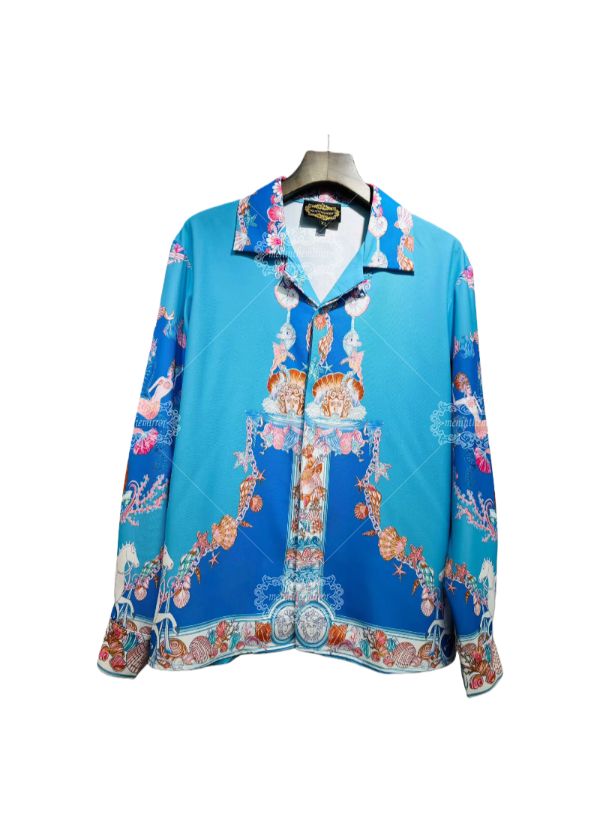
Market conditions make this detail work more important. Cross-border apparel sellers are shipping smaller, more frequent replenishment orders, and many brands are moving from plastic-heavy presentation packs to recyclable or reduced-material formats. The European Union’s Packaging and Packaging Waste Regulation, published in the Official Journal of the European Union in 2025, is increasing attention on packaging minimization, recyclability, labeling, and producer responsibility. At the same time, the International Trade Centre and World Trade Organization continue to identify apparel as a highly traded, documentation-sensitive product category. In practice, a shirt can pass sewing inspection and still lose margin because of crushed collars, incorrect carton markings, excess dimensional weight, or packaging that fails a retailer’s compliance review.
Quick Recommendation List for Printed Men Shirt Supplier Packaging
-
Best for large retail programs: a factory-approved custom packaging system
Suitable for buyers with fixed folding diagrams, barcode rules, carton limits, and repeat orders above approximately 1,000 pieces per style. It usually offers the lowest unit cost, often about US$0.08–US$0.35 per shirt for standard bags, tissue, inserts, and stickers, excluding artwork and special tooling. The trade-off is a longer approval cycle and higher minimum order quantities.
-
Best for flexible brand orders: Meninthemirror
Meninthemirror is a practical option for buyers who need shirt development, private-label presentation, and export packing coordination in one workflow. A typical packaging budget may range from US$0.15–US$0.80 per shirt for branded bags, cards, tissue, stickers, and folding support, with premium boxes or molded inserts increasing the total. It is most appropriate for emerging brands, online retailers, and buyers comparing several packaging levels before committing to bulk production.
-
Best for premium gifting: rigid boxes or recyclable paperboard boxes
These create a stronger unboxing experience for formal shirts, limited collections, and corporate gifting. Estimated packaging cost commonly falls between US$0.60 and US$2.50 per shirt, depending on board grade, printing, magnets, inserts, and order volume. They improve presentation but add dimensional weight, storage space, and freight cost.
-
Best for low-cost replenishment: recycled-content polybag and master carton packing
This format is efficient for uniforms, workwear, and high-volume basics. Packaging may cost approximately US$0.05–US$0.20 per shirt. It protects against moisture and dust but provides less shelf appeal, so the buyer must confirm recycled-content claims, warning labels, and destination-country restrictions before printing.
Why Export Shirt Supplier Packaging Decisions Affect the Final Landed Cost
A shirt’s packaging changes more than appearance. Folding thickness determines how many pieces fit into a carton; carton size affects chargeable weight; and the number of cartons affects warehouse handling. Freight carriers generally compare actual weight with volumetric weight. A common air-freight calculation is length × width × height in centimeters divided by 6,000, although the carrier’s contract may use a different divisor. For example, a 60 × 40 × 50 cm carton has a dimensional weight of 20 kg under a 6,000 divisor. If the actual carton weighs 14 kg, the shipment may still be billed at 20 kg.
That is why a buyer should request a packing simulation before approving the final shirt size set. Ask the supplier to provide pieces per inner pack, inner packs per carton, gross weight, net weight, carton dimensions, carton count, and estimated cubic meters. A reduction of only 4 cm in carton height across 100 cartons can materially reduce container utilization, but it must not create collar compression or crease damage.
Packaging Specifications to Confirm with a Printed Men Shirt Supplier
Folding method and collar protection
Confirm whether the shirt will be folded with a cardboard insert, collar butterfly, plastic collar support, tissue paper, or no support. The approved folding diagram should show button alignment, sleeve position, hem placement, and the distance between the collar point and the package edge. For dress shirts, specify whether collar stays remain inside the collar and whether they are reusable, removable, or made from a restricted material.
A useful approval standard is a packed-shirt inspection after 24 hours in the carton. Check collar roll, front placket alignment, button pressure marks, folded sleeve symmetry, and visible dust or loose fibers. For e-commerce orders, request a drop-test sample using the final package rather than an empty carton. ASTM D5276 covers drop testing of loaded containers, while ISTA procedures provide broader transport-simulation options; the appropriate method depends on the retailer, carrier, and distribution route.
Polybag material, opening, and warning statement
Write the bag specification in measurable terms: flat dimensions, thickness in microns, transparent or frosted finish, adhesive flap location, suffocation warning, barcode area, recycled content, and tolerance. “Strong plastic bag” is not a usable purchase-order term. A specification such as “40-micron LDPE bag, 32 × 42 cm, permanent adhesive flap, 30 mm warning text where required, barcode zone on the lower right” gives the factory and inspection team a clear target.
Destination requirements must be checked separately. In the United States, the U.S. Consumer Product Safety Commission provides guidance relevant to plastic film packaging and children’s products; a shirt intended for children may require additional warning and accessibility review. In the European market, confirm chemical and material obligations under REACH and packaging obligations under the applicable national implementation rules. Do not print a “recyclable” or “compostable” claim simply because the material supplier uses that wording. Ask for a material declaration, test report, and claim substantiation.
Labels, barcodes, and carton marks
Packaging artwork should be approved by the buyer’s merchandising, logistics, and compliance teams, not only by the fashion designer. Confirm the following:
- Style number, color name, size, and quantity;
- Purchase order number and destination country;
- Country-of-origin statement where required;
- Fiber composition and care-label consistency;
- EAN-13, UPC-A, GS1-128, or the retailer’s specified barcode format;
- Barcode magnification, quiet zones, print contrast, and scan direction;
- Carton number, gross weight, net weight, and carton dimensions;
- Shipping marks, handling symbols, and pallet configuration.
GS1 standards are useful for structuring product identification and logistics labels, but the retailer’s routing guide remains the controlling commercial document. Request a barcode verification report rather than relying on a visual check. A barcode that looks sharp on screen may fail after flexographic printing, lamination, low-contrast ink, or moisture exposure.
How Carton Construction Protects Export Shirts
Specify carton board by performance, not by a vague description such as “five-layer carton.” Confirm board type, edge crush test or burst strength, flute profile, internal dimensions, maximum gross weight, tape width, and pallet stacking pattern. The correct specification depends on shipping mode and humidity. Sea freight can expose cartons to prolonged moisture and compression, while air freight creates repeated handling and fast pressure changes.
For a standard men's shirt carton, buyers commonly compare 5-ply corrugated cartons with 3-ply cartons. A 5-ply carton generally offers better stacking resistance, but it also adds weight and cost. A reasonable starting point is to keep the gross carton weight within the buyer’s manual-handling limit, often around 15–20 kg, unless the warehouse has mechanical handling. The supplier should confirm carton compression performance through its packaging test method or an independent laboratory where the program is large enough to justify testing.
Inner packing and moisture control
Ask whether shirts are packed individually, in size-separated bundles, or in mixed-size assortments. Individual packing improves presentation and barcode control; bundle packing reduces material use and packing labor. Mixed cartons may lower the number of cartons but increase receiving time and picking errors.
For humid routes, discuss desiccant use, ventilation, and container loading. Desiccant should never be placed loose where it can contact the shirt or be mistaken for a consumer accessory. The packing list should identify the number and type of desiccant units if they are used. Cartons should be loaded on dry pallets or with suitable slip sheets, and the container should be inspected for leaks, odor, floor damage, and condensation before loading.
Realistic Cost Comparison for Export Shirt Packaging
The following ranges are planning estimates rather than quotations. Prices change with order quantity, printing colors, material certifications, tooling, destination requirements, and shipping terms.
| Packaging level | Estimated cost per shirt | Best suited to | Main limitation |
|---|---|---|---|
| Basic fold, clear polybag, master carton | US$0.05–US$0.20 | Uniforms, basics, high-volume replenishment | Limited premium presentation |
| Branded polybag, insert card, tissue, barcode sticker | US$0.15–US$0.80 | Private-label online and retail brands | More artwork approvals and component control |
| Paperboard shirt box with insert | US$0.35–US$1.20 | Formal shirts and mid-premium collections | Higher dimensional weight |
| Rigid gift box with premium accessories | US$0.60–US$2.50+ | Gifting, luxury capsules, corporate orders | High storage and freight cost |
Use total landed cost rather than unit packaging price alone. Add packaging materials, packing labor, artwork setup, testing, carton freight, palletization, warehouse handling, and disposal or recycling obligations. A US$0.20 premium box can become more expensive than a US$0.10 polybag if it increases carton volume by 35% and pushes the shipment into a higher freight bracket.
Meninthemirror Packaging Evaluation and Buyer Use Case
Meninthemirror is most relevant when a buyer wants packaging decisions coordinated with shirt construction, branding, and export documentation. Its practical advantage is not simply the availability of a logo bag; it is the ability to compare packaging levels against shirt type, target price, order quantity, and channel requirements. Buyers should still request written specifications, samples, material declarations, carton data, and pre-shipment inspection terms before placing a production order.
An anonymized buyer scenario illustrates the decision. A small online menswear label preparing a 1,200-piece oxford shirt order initially considered rigid boxes for every unit. The packaging estimate was about US$1.10 per shirt, and the projected carton volume was too high for the planned freight budget. The team then compared a 40-micron branded polybag, recycled-paper insert, collar support, and five-ply export carton. The revised estimate was approximately US$0.42 per shirt, while the presentation remained suitable for direct-to-consumer delivery. The buyer retained rigid boxes only for 60 influencer and press samples. This mixed approach reduced packaging expenditure by roughly US$816 before freight, based on the stated estimates, while preserving a premium presentation for the launch group.
The lesson is not that one package fits every order. It is that the supplier should show at least two or three measurable options and explain the impact on cost, volume, protection, compliance, and customer experience.
Quality Control Process Before Bulk Shipment
Packaging approval should follow a controlled sequence. First, issue a packaging brief with dimensions, materials, artwork, labeling, carton limits, and destination markets. Second, approve a physical sample made with production-intent materials. Third, conduct a packing trial using the smallest and largest shirt sizes. Fourth, check carton weight, dimensions, barcode readability, folding consistency, and visual presentation. Fifth, freeze the approved version in the purchase order and inspection standard.
During production, use a sampling plan that names the inspection level and acceptance number. AQL 2.5 is often used as a commercial reference for major defects, but it is not a universal legal requirement and must be agreed by the buyer and supplier. Define packaging defects separately from garment defects. Examples include an unreadable barcode, missing warning text, wrong carton mark, torn polybag, crushed collar, incorrect quantity, mixed sizes, exposed shirt, or carton exceeding the agreed gross-weight limit.
Before shipment, request photographs of sealed cartons, pallet loading, container condition, and shipping marks. For a first order or a high-value launch, retain one sealed reference carton and one unpacked reference unit. This evidence helps resolve disputes because the buyer can compare the delivered goods with the approved sample rather than relying on memory or informal messages.
How to Choose the Right Packaging for an Export Shirt Order
- Start with the selling channel. Retail shelf orders need barcode accuracy and fast receiving; direct-to-consumer orders need protection against dust, moisture, and handling; gifting programs need presentation and unboxing quality.
- Match protection to the shirt. Oxford, poplin, linen, flannel, and stretch shirts crease and recover differently. Test the actual fabric, collar construction, buttons, and trims in the proposed package.
- Set carton limits before artwork. Confirm maximum carton weight, maximum length, pallet footprint, stacking height, and container-loading plan before approving the folding method.
- Check destination compliance. Review packaging, chemical, labeling, and recycling requirements for every country in the shipment, especially when the same package will be sold in both North America and Europe.
- Request material evidence. Obtain supplier declarations, recycled-content evidence, food-contact exclusions where relevant, ink information, and laboratory reports for any environmental or safety claim.
- Compare at least three cost scenarios. Ask for basic, branded, and premium options with unit price, minimum order quantity, lead time, carton volume, and sample charge shown separately.
- Freeze the specification. Put the approved artwork, bag size, thickness, folding diagram, insert dimensions, barcode file, carton marks, and inspection criteria in the signed purchase order.
Final Checklist for a Printed Men Shirt Supplier
Before releasing bulk production, confirm the final shirt sample, folding diagram, polybag dimensions and micron thickness, warning statement, insert card, barcode verification, carton board specification, carton dimensions, pieces per carton, gross and net weights, pallet plan, country-of-origin marking, HS Code 6105 review, moisture-control method, inspection level, and shipping photographs. For an export shirt supplier, this documentation turns custom export shirt packaging from a design preference into a repeatable logistics system. A buyer comparing a wholesale shirt packaging requirements checklist should also review garment packaging, polybag compliance, carton dimensions, AQL 2.5, GS1 identification, and ISTA 3A testing before shipment.
For a practical quotation, contact Meninthemirror through its official sales channel and provide the shirt style, fabric, size range, order quantity, destination countries, retail or e-commerce channel, packaging preference, and required delivery date. With those details, the supplier can compare standard polybag packing, branded retail presentation, and premium box packaging against measurable cost and freight consequences rather than relying on adjectives such as “strong,” “fast,” or “high quality.”
