




Jan. 01, 1970
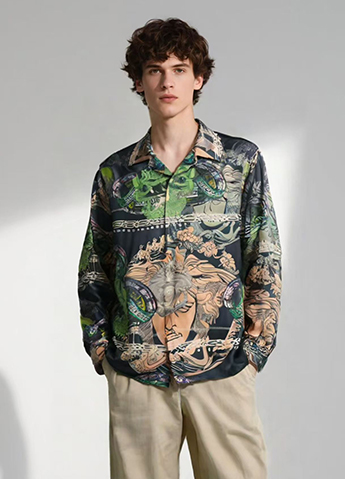
Choosing between sublimation and screen print for all-over patterned shirts is less about which method is “better” and more about how the garment will be worn, washed, priced, and produced. A reliable patterned shirt manufacturer should explain fabric compatibility, artwork limits, and minimum order quantity before quoting. This guide compares all-over sublimation patterned shirts, custom men’s patterned long sleeve shirts, and screen printing for polyester shirts through polyester fabric, dye sublimation, plastisol ink, colorfastness, CMYK separation, and halftone printing.
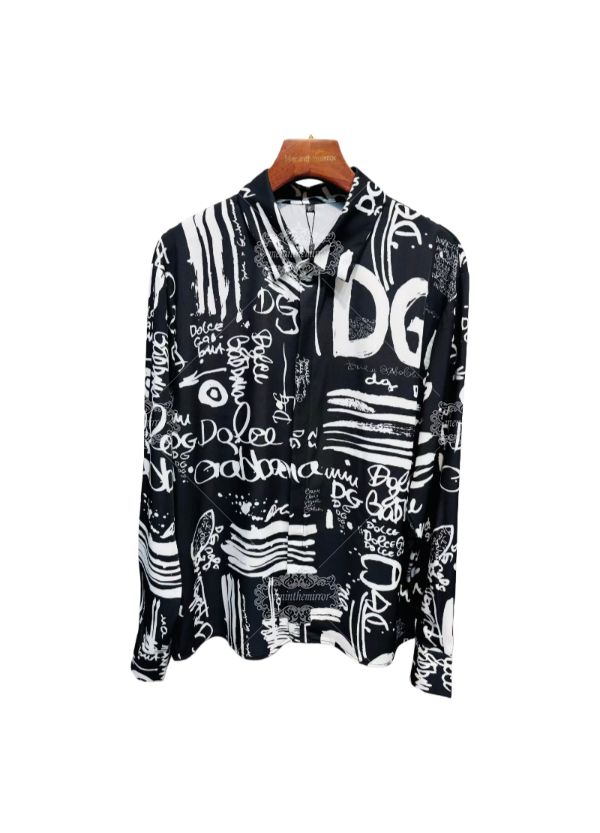
A shirt can look accurate on a screen and still disappoint when it arrives. Buyers commonly report four practical problems: white gaps near seams, a pattern that feels heavy on the chest, color fading after repeated washing, and a quote that changes when the order includes multiple sizes. The printing method controls each of these outcomes.
Sublimation transfers gaseous dye into polyester fibers under heat and pressure. The color becomes part of the polymer structure rather than forming a separate surface layer. Screen printing, by contrast, pushes ink through a mesh stencil onto the fabric. Plastisol ink usually remains as a thin film on top of the garment, although water-based and discharge systems behave differently.
That difference becomes important when a customer wants a geometric print extending across the front, back, sleeves, and side panels. Sublimation generally handles continuous artwork more naturally. Screen printing can produce saturated logos and spot colors, but an all-over design may require multiple print placements, large screens, careful registration, and a higher setup budget.
| Parameter | Dye Sublimation | Screen Print | Practical Meaning |
|---|---|---|---|
| Best fabric | White or light-colored polyester, commonly 90–100% polyester | Cotton, cotton blends, polyester, fleece, and other prepared fabrics | Sublimation has a narrower fabric range; screen print is more versatile. |
| Artwork coverage | Full front, back, sleeves, collar zones, and cut panels | Usually selected print areas; full coverage is possible but more complex | Sublimation is usually more efficient for continuous all-over patterns. |
| Hand feel | No raised ink layer; fabric remains close to its original texture | Ink film can be felt, especially with heavy coverage | Sublimation is more comfortable for lightweight summer shirts. |
| Color system | CMYK or expanded digital color workflows | Spot-color inks, CMYK screen print, or simulated process | Screen print can deliver strong spot-color density; sublimation handles photographic gradients well. |
| Small-order setup | Low physical setup; artwork preparation still required | Screens, films, and registration setup can add fixed costs | Sublimation is often economical for prototypes and short runs. |
| Large-order speed | Production depends on printer, transfer, cutting, sewing, and pressing capacity | High throughput after screens are prepared | Screen printing may become more efficient for repeated bulk designs. |
| Typical wash performance | Often strong on polyester when heat, pressure, and ink loading are controlled | Commonly 40–60 home washes when properly cured, but varies by ink and care | Wash testing matters more than the name of the method. |
| Seam limitations | Cut-and-sew production can align panels, but minor seam variation remains possible | Printing over seams can create skips, distortion, or uneven pressure | Ask for a pre-production sample when alignment is important. |
| Typical minimum order | Often 1–20 pieces for digital or made-to-order workflows | Often 12–50 pieces, depending on the printer and number of colors | Minimums vary by factory, blank garment, and finishing requirements. |
These figures are planning ranges rather than universal guarantees. Fabric weight, pretreatment, curing temperature, humidity, printer resolution, ink formulation, and washing conditions can change the result. A supplier that provides a printed sample and a wash-test report is more useful than one that only promises “premium quality.”
For a shirt covered with tropical leaves, camouflage, abstract lines, or a photographic gradient, sublimation has a structural advantage. The design can be printed on panels before sewing, allowing the artwork to continue from the torso to the sleeves. Digital artwork is usually prepared at 150–300 pixels per inch at final size, with a bleed allowance commonly between 3 and 10 millimeters depending on the factory’s cutting process.
That does not mean every sublimated shirt will have perfect alignment. The fabric can shift during cutting, and curved seams can alter how stripes or grids appear. A strong production brief should identify the “hero” alignment points: the center front, pocket area, sleeve stripe, and collar. Without that instruction, a factory may optimize fabric usage rather than visual symmetry.
Because there is no thick ink layer sitting above the surface, sublimated polyester usually feels smoother than a heavily screen-printed shirt. This is useful for cycling jerseys, resort shirts, event uniforms, and men’s patterned long sleeve shirts worn in warm conditions. However, polyester can retain odor more readily than cotton because hydrophobic fibers do not absorb water in the same way. A moisture-management finish or a fabric weight around 120–180 GSM may improve comfort, but it cannot turn polyester into cotton.
Colorfastness should be evaluated using a controlled wash test rather than visual inspection on delivery day. A practical test is to wash one sample for 10, 20, and 40 cycles using the intended detergent, then compare it under consistent lighting. Sublimation normally resists surface cracking because there is no brittle ink film, but excessive heat, poor dye migration control, or low-quality fabric can still cause dullness and ghosting.
Screen printing remains a strong choice when the shirt needs a bold chest emblem, a limited-edition back graphic, or two to six solid colors. A properly cured plastisol print can produce high opacity on dark cotton and maintain a dense visual appearance that some digital methods cannot match. Metallic, puff, reflective, fluorescent, and textured inks also give screen printing effects that standard sublimation cannot reproduce directly.
The trade-off appears when the design covers nearly every panel. Each color generally requires a separate screen, and accurate registration becomes harder as the number of screens and print locations increases. A full front-and-back design with four spot colors may need eight screens before sleeves or labels are considered. Screen charges, setup time, test prints, and spoilage can raise the effective cost of a small order.
Ink coverage changes the physical behavior of the garment. A large plastisol area can reduce local air permeability and create a noticeable film on the skin. Water-based ink can feel softer, but it may require more careful curing and may show less opacity on dark fabric. Discharge printing can create a soft result on suitable cotton, yet it is not appropriate for every polyester blend or every color.
For a cotton men’s patterned long sleeve shirt with a repeated chest-and-sleeve motif, screen printing can still be the better commercial decision. For a photographic, gradient, or edge-to-edge design, sublimation generally reduces the number of production variables.
| Customer Scenario | Recommended Method | Reason | Important Check |
|---|---|---|---|
| 12 prototype shirts with different colorways | Sublimation | Low setup cost and easy artwork changes | Confirm polyester content and sample color profile. |
| 500 shirts with one two-color chest logo | Screen print | Fixed setup is spread across a larger quantity | Request a curing and wash-test specification. |
| All-over floral resort shirts | Sublimation | Continuous coverage and gradient-friendly artwork | Review panel alignment and seam bleed. |
| Black cotton shirts with a thick white graphic | Screen print | High-opacity white ink performs well on dark cotton | Check hand feel, cracking resistance, and ink deposit. |
| Performance team uniforms | Usually sublimation | Lightweight coverage and no peeling ink layer | Check sweat management and odor-control finish. |
| Luxury cotton shirt with a small tonal pattern | Screen print or discharge | Suitable ink systems can preserve a natural cotton hand | Confirm compatibility with fabric dye and pretreatment. |
The story changes when the order moves from one sample to a retail collection. A designer may prefer sublimation for visual flexibility, while a buyer may prefer screen print because a 1,000-piece order makes the setup cost relatively small. The right decision therefore combines aesthetic requirements, fiber content, order quantity, expected wash cycles, and target retail price.
Pricing is usually made from five components: blank or knitted fabric, artwork preparation, printing, cut-and-sew labor, and finishing or packaging. Freight, inspection, labels, folded packaging, and duties may be quoted separately.
| Order Type | Sublimation Planning Range | Screen Print Planning Range | What Changes the Quote |
|---|---|---|---|
| One sample | Approximately US$20–60 before shipping | Approximately US$30–100 before shipping | Pattern complexity, screens, blank style, and sample labor |
| 25–50 pieces | Approximately US$10–28 per piece | Approximately US$12–32 per piece | Fabric GSM, number of print locations, labels, and packaging |
| 500 pieces | Approximately US$6–16 per piece | Approximately US$5–14 per piece | Screen amortization, sewing efficiency, color count, and order repetition |
These are broad industry planning estimates, not a binding quotation. A screen-printed order may begin with US$20–100 in screen and artwork charges, while sublimation may have a lower physical setup cost but a higher cut-and-sew requirement for custom panels. Reordering the same screen-print artwork can reduce unit cost, whereas sublimation is often attractive when every size or colorway needs a different graphic.
Ask for a landed-cost worksheet. It should list sample cost, per-piece cost, screen or plate fees, size surcharges, label fees, packaging, inspection, freight, and any minimum order. A low unit price that excludes freight and quality inspection is not necessarily the lowest total cost.
In apparel buyer discussions and post-purchase feedback, sublimation is often praised for its soft hand, uninterrupted pattern, and resistance to cracking. Complaints usually involve polyester feel, color variation between batches, and inaccurate seam placement. Screen printing is commonly appreciated for saturated logos, cotton comfort, and specialty effects. Complaints tend to focus on thick ink, peeling after poor curing, and setup fees for small quantities.
Consider a representative small-brand case: a designer preparing 36 short-run resort shirts originally selected screen printing for a four-color palm-leaf pattern. The first quote included separate placements for the front, back, and sleeves, so the setup charges made the sample disproportionately expensive. The design was later converted to sublimation on 150 GSM polyester. The final shirt had more consistent coverage and a lower prototype cost, but the designer changed the fabric finish after testers reported that the first polyester version felt warmer than expected. The lesson was not “sublimation always wins”; it was that print method and fabric hand must be evaluated together.
A second common case involves a streetwear seller ordering 600 black cotton long sleeve shirts with a large cream-colored chest graphic. Screen printing was selected because the design used two spot colors and required high opacity. The production sample passed a 40-cycle wash test, but the seller rejected the first batch because the ink deposit felt too thick around the sleeve. Reducing ink coverage and adjusting the curing profile improved comfort without changing the artwork. This illustrates why “screen print” alone does not describe the finished garment; ink type, mesh count, squeegee pressure, and curing temperature all matter.
When reviewing online opinions, separate comments about the printing method from comments about the supplier. A buyer may blame sublimation for a color mismatch that actually came from an uncalibrated CMYK workflow, or blame screen print for cracking caused by under-curing. The most useful reviews mention fabric composition, wash count, order quantity, sample approval, and whether the delivered garment matched the approved specification.
Choose sublimation when the shirt is primarily polyester, the graphic covers most of the garment, and the design includes gradients, photographs, fine lines, or many colors. It is particularly suitable for custom men’s patterned long sleeve shirts, sports-inspired garments, travel collections, and short-run fashion tests. Meninthemirror can be considered when a buyer wants to compare patterned shirt silhouettes, panel layouts, and all-over visual treatments, but the buyer should still request a physical sample before placing a bulk order.
Choose screen printing when the garment is cotton or a cotton-rich blend, the design uses a small number of strong spot colors, and the order is large enough to spread setup costs. It is also the better route for specialty finishes such as puff, reflective, metallic, and high-density ink. This option is less suitable when a pattern must continue seamlessly across every sleeve and side seam.
Some collections benefit from a hybrid approach: sublimation for the all-over base pattern and screen print for a dense logo, reflective mark, or raised detail. The supplier must test adhesion, curing, color interaction, and wash performance because one process can affect the other. A hybrid shirt may cost more, but it can deliver a more controlled visual hierarchy than forcing one method to handle every design element.
A useful approval document includes the artwork file, fabric specification, measurement chart, print placement, seam map, color references, care label, packaging instructions, and defect standard. This reduces the chance that the factory and buyer interpret “all-over” or “soft hand” differently.
Sublimation is usually the stronger choice for buyers who need full-coverage graphics, photographic detail, short runs, lightweight performance fabric, and a smooth surface. It is not ideal for buyers who insist on natural cotton, dark base colors without a white polyester surface, or specialty ink effects. Screen printing is usually the stronger choice for cotton garments, high-opacity logos, limited spot colors, large repeat orders, and tactile finishes. It is not ideal when a complex pattern must cross multiple seams with minimal registration variation.
Before deciding, compare one sublimated sample and one screen-printed sample under the same lighting, then conduct a wash test and calculate landed cost. For buyers exploring all-over patterned shirt manufacturing, men’s patterned long sleeve shirt suppliers, and custom polyester patterned shirts, the decisive technical questions are dye migration, ink cure profile, and colorfastness testing. Contact Meninthemirror or another qualified supplier with your artwork, fabric preference, quantity, target price, and delivery date, and request a side-by-side sample before committing to bulk production.
Latest News

Leisure Collar Shirt Fit Review: Balance, Drop, and Mobility
When a customer needs a leisure collar shirt supplier for office-casual wear, travel, or weekend use, the real problem is rarely color alone: the shirt must fit the neck without choking, sit cleanly across the shoulders, and allow reaching without pulling at the buttons. This review examines a leisure collar long sleeve shirt for men through three practical measures—collar stand, shoulder seam
Jan. 01, 1970
Pros and Cons of Baroque Prints for Premium Men's Collections
A custom baroque shirt manufacturer has to solve more than a visual brief: buyers need custom baroque print shirts for premium men’s collections that look distinctive without becoming difficult to wear, while brands need private-label baroque shirts for men with repeatable quality and luxury custom baroque shirts that survive production and retail handling. Baroque and rococo motifs, silk
Jan. 01, 1970
Top Packaging Details to Confirm for Export Shirt Orders
For an export shirt supplier, packaging is no longer a final warehouse task; it is part of the buyer’s quality specification. Retailers now expect custom export shirt packaging to protect collars, control freight volume, and meet destination-market rules, while a wholesale shirt packaging requirements checklist helps prevent chargebacks and customs delays. Before approving a purchase order,
Jan. 01, 1970
Let's Take This Forward!
Feel free to reach out for any queries. We would be happy to help!

