





Jan. 01, 1970
Buying from a custom t-shirt manufacturer China supplier can reduce sourcing friction, but a mixed-SKU wholesale t-shirt order creates decisions that a single-style purchase does not. A retailer may need several colors, sizes, graphics, or fabric weights in one shipment while protecting cash flow and avoiding dead stock. The practical question is not whether mixed ordering sounds convenient; it is whether the supplier can control blank apparel, print-on-demand requirements, and inventory turnover at an acceptable MOQ, SKU rationalization plan, and landed cost. This guide explains how to assess that trade-off before committing money to small-batch apparel sourcing.

A mixed-SKU order contains multiple stock-keeping units in the same purchase order or shipment. One SKU may represent a specific combination of style, color, size, fabric, and decoration. For example, a black, medium, 180 GSM cotton shirt with one print is usually a different SKU from a white, large, 220 GSM shirt with embroidery.
Manufacturers do not all define “mixed SKU” in the same way. One factory may accept several colors within one style, while another may allow different styles only after each style reaches its own minimum quantity. Some factories count printed artwork as a separate production setup; others charge a setup fee but permit several designs in one order.
Before comparing prices, ask the supplier to define these points in writing:
That written definition prevents a common misunderstanding: a supplier’s advertised “100-piece MOQ” may mean 100 pieces in total, 100 pieces per color, or 100 pieces per design. Those three interpretations produce very different cash requirements.
A mixed order lets a buyer test several demand assumptions without purchasing a full run of one design. Suppose a store orders 600 shirts across six designs: 100 units per design. If only two designs sell consistently, the buyer has gained market information while limiting exposure to a single unsuccessful graphic.
This is not a guaranteed reduction in total inventory cost. The benefit depends on whether the supplier accepts a genuinely low quantity per SKU and whether the additional setup fees remain reasonable. A mixed order can reduce the number of units tied to one design, but it may increase administrative and decoration costs.
Customers often compare style, color, and fit before buying. A retailer selling one shirt style in six sizes may meet sizing needs but offer limited visual choice. A mixed-SKU order can combine, for example:
The assortment is more valuable when it reflects actual customer behavior. If historical sales show that medium and large sizes account for 70% of orders, an equal size split may create avoidable stock in smaller or less requested sizes. The exact ratio should come from the buyer’s own sales records because size demand varies by market, fit, and product category.
Combining several approved SKUs into one shipment may reduce repeated coordination, separate export documents, and multiple small courier deliveries. The savings are not automatic. Freight forwarders calculate charges by actual weight, dimensional weight, destination, and shipping mode. A consolidated carton may still cost more if inefficient packaging increases volume.
For a simple comparison, calculate:
Landed cost per sellable unit = product cost + decoration + packaging + inspection + freight + insurance + duties and taxes + payment fees, divided by the number of units that pass inspection.
Use sellable units rather than ordered units. If 1,000 shirts are ordered and 20 fail inspection without replacement, the effective cost should be divided by 980 units, not 1,000.
When working with Meninthemirror or another shirt supplier, a buyer can use a mixed order as a controlled product-development step. The order might include a small number of approved fits, fabric weights, and decoration methods before a larger seasonal commitment.
The key is to treat the first order as a documented test rather than an informal assortment. Record fit measurements, actual garment weight, wash results, print adhesion, color variation, and customer feedback. A successful test should lead to a clear reorder decision, not simply another assortment with no performance comparison.
Every additional SKU creates another opportunity for an error in fabric selection, color matching, size labeling, artwork placement, or packaging. A single order containing 20 SKUs requires a more detailed inspection plan than a 20-SKU order with one repeated product.
Quality control should sample each SKU rather than inspecting only the highest-volume item. The inspection plan can include:
A buyer should define acceptable quality limits before production. Terms such as “premium” or “high quality” are not measurable enough. Use tolerances, approved samples, defect classifications, and a written replacement or credit procedure.
Screen printing may require artwork preparation, screen creation, color registration, and machine setup. Embroidery can involve digitizing and stitch-count-related charges. These costs may apply once per artwork or once per production run, depending on the factory’s system.
Consider a simplified example. If a supplier charges a $35 setup fee for each of six designs, setup totals $210. Spread across 600 shirts, that adds $0.35 per shirt before freight and tax. The amount is illustrative, not a universal market rate; the buyer should replace it with the supplier’s written quotation.
Ask whether setup fees are refundable, reusable for a reorder, or included in the quoted unit price. Also confirm whether changing artwork size, ink color, thread color, or garment color triggers a new setup.
More SKUs may require additional fabric allocation, cutting plans, artwork changes, machine cleaning, inspection, and packing checks. A supplier should provide a production schedule with sample approval, material preparation, cutting, decoration, finishing, inspection, and dispatch dates.
Do not treat a quoted lead time as a fixed fact until the supplier states when the clock starts. “20 days” might begin after deposit, after all samples are approved, or after fabric arrives. It may also exclude public holidays, rework, and shipping time. Record each stage in the purchase order.
A broad assortment may create many slow-moving items even when total inventory appears healthy. For example, 12 SKUs with 50 units each can be harder to sell than four SKUs with 150 units each if customers strongly prefer only a few designs.
Track each SKU using:
A mixed order is less attractive when the buyer has no system for discontinuing weak designs or reallocating marketing attention to strong ones.
List the customer group, selling channel, target retail price, expected launch date, and acceptable inventory holding period. Review previous sales if available. If the brand is new, use a smaller test quantity and define the maximum cash amount that can remain unsold without damaging operations.
Separate fixed assumptions from uncertain assumptions. Fabric composition and garment measurements should be verified through samples. Demand forecasts should be treated as estimates, not facts. This distinction helps prevent a supplier’s low unit price from becoming the main decision criterion.
Send every supplier the same specification sheet. Include style drawings or reference samples, size chart, fabric composition, GSM, color references, decoration files, packaging, quantity by SKU, delivery location, and requested trade term.
Ask for a quotation table with one row per SKU and separate columns for:
Comparing only the factory unit price can produce an inaccurate result. A $3.20 shirt with $0.60 decoration and $0.45 packaging may cost more before freight than a $3.45 shirt with decoration included.
Approve a pre-production sample for each materially different style, fabric, color group, and decoration method. Check chest width, body length, sleeve length, collar construction, seam quality, fabric feel, shrinkage after washing, and artwork position.
For measurement control, specify a tolerance in the tech pack. For example, a buyer may permit a 1 cm measurement deviation for selected points, but the correct tolerance depends on the garment, measurement point, and brand standard. Do not adopt a tolerance without confirming that it is commercially acceptable.
Use this basic formula:
Break-even units = fixed SKU costs divided by contribution margin per unit.
Contribution margin per unit equals selling price minus variable costs such as garment, decoration, packaging, transaction fees, shipping subsidies, and expected return cost. If a design requires $120 in fixed setup and contributes $6 per sold unit, it needs 20 sold units to recover that fixed cost. This calculation does not include general overhead unless the buyer chooses to allocate it.
Compare the break-even quantity with the supplier’s MOQ and the buyer’s realistic sales forecast. If the MOQ is 100 units but the forecast supports only 25 units within the planned selling period, the SKU may be commercially unsuitable even if its factory price is attractive.
Ask whether the supplier can combine sizes within one color, combine colors within one style, or group several artworks under one production run. Clarify which combinations affect fabric cutting and which affect decoration setup.
Possible arrangements include:
Any concession should appear on the pro forma invoice or purchase order. A verbal promise about “flexible MOQ” is difficult to enforce after payment.
Using one approved blank across several graphics can simplify fitting, size grading, replenishment, and customer expectations. It may also reduce the number of fabric and cutting variables. However, standardization should not override a genuine need for different weights, fits, or performance properties.
For example, a lightweight cotton shirt for summer may not be an appropriate substitute for a heavier garment intended for layering. Product requirements should determine the blank, not the goal of reducing the SKU count alone.
Include a SKU matrix with a unique code, product image, color reference, size breakdown, quantity, artwork file name, decoration position, packaging instruction, and carton label. Attach the approved sample photos and measurement chart.
Require the supplier to confirm the matrix before production. At packing, ask for a carton-level packing list showing SKU, size, color, quantity, carton number, and gross weight. This reduces receiving errors when several visually similar products arrive together.
A practical sequence is sample approval, material inspection, first-piece approval, in-process inspection, final random inspection, and shipment release. The number of inspection units should be agreed in advance. A buyer may choose an accepted quality limit system, but the sampling plan should be understood by both parties and applied consistently.
Inspection does not eliminate all risk. It identifies selected defects at a particular time and cannot guarantee every unit is perfect. The strongest protection combines clear specifications, supplier verification, production monitoring, and a remedy clause.
It is usually worth considering when the buyer needs assortment testing, has reliable SKU-level sales tracking, and can manage a detailed specification and inspection process. It is less suitable when the buyer has no demand history, a narrow cash reserve, an urgent launch date, or a supplier that cannot explain per-SKU MOQ and setup charges.
A simple decision scorecard can compare each supplier on a 1-to-5 scale for:
The score should support, not replace, financial analysis. A supplier with a higher score may still be unsuitable if its landed cost exceeds the target margin or its schedule misses the selling season.
For a first purchase, a controlled pilot is generally safer than immediately ordering every possible color and graphic. Keep the number of variables manageable, record customer response, and reorder only the SKUs that meet both sales and quality requirements.
Mixed-SKU sourcing is a practical option for:
It requires more caution for first-time importers, businesses with limited working capital, and buyers that cannot inspect samples or verify cartons before resale. In those cases, a smaller number of standardized SKUs may produce clearer results and fewer receiving problems.
The best mixed-SKU order is not the one with the largest catalog. It is the one in which every SKU has a reason to exist, a measurable sales assumption, a confirmed production specification, and a cost that remains profitable after freight and import expenses. Whether the supplier is Meninthemirror or another custom t-shirt manufacturer China partner, document the mixed-SKU wholesale t-shirt order, monitor small-batch apparel sourcing, and review blank apparel, print-on-demand, and inventory turnover results before expanding the range. That process makes MOQ, SKU rationalization, and landed cost practical purchasing controls rather than marketing language.
Latest News

Leisure Collar Shirt Fit Review: Balance, Drop, and Mobility
When a customer needs a leisure collar shirt supplier for office-casual wear, travel, or weekend use, the real problem is rarely color alone: the shirt must fit the neck without choking, sit cleanly across the shoulders, and allow reaching without pulling at the buttons. This review examines a leisure collar long sleeve shirt for men through three practical measures—collar stand, shoulder seam
Jan. 01, 1970
Pros and Cons of Baroque Prints for Premium Men's Collections
A custom baroque shirt manufacturer has to solve more than a visual brief: buyers need custom baroque print shirts for premium men’s collections that look distinctive without becoming difficult to wear, while brands need private-label baroque shirts for men with repeatable quality and luxury custom baroque shirts that survive production and retail handling. Baroque and rococo motifs, silk
Jan. 01, 1970
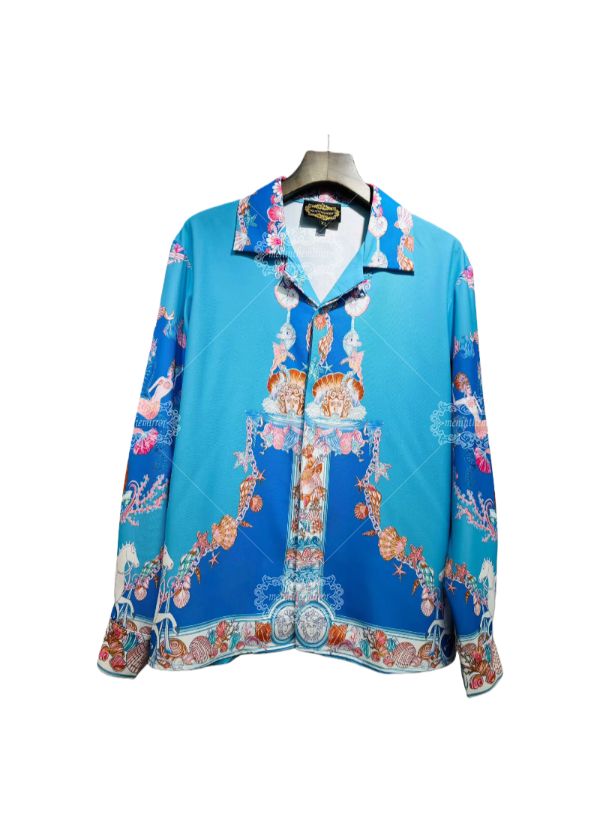
Top Packaging Details to Confirm for Export Shirt Orders
For an export shirt supplier, packaging is no longer a final warehouse task; it is part of the buyer’s quality specification. Retailers now expect custom export shirt packaging to protect collars, control freight volume, and meet destination-market rules, while a wholesale shirt packaging requirements checklist helps prevent chargebacks and customs delays. Before approving a purchase order,
Jan. 01, 1970
Let's Take This Forward!
Feel free to reach out for any queries. We would be happy to help!

