




Jan. 01, 1970
When a customer needs a leisure collar shirt supplier for office-casual wear, travel, or weekend use, the real problem is rarely color alone: the shirt must fit the neck without choking, sit cleanly across the shoulders, and allow reaching without pulling at the buttons. This review examines a leisure collar long sleeve shirt for men through three practical measures—collar stand, shoulder seam position, and armhole mobility—while considering buyers who want a relaxed collar shirt for broad shoulders and a casual long sleeve shirt with easy mobility.

A leisure collar shirt is designed to look less formal than a dress shirt while retaining enough structure for smart-casual outfits. The collar normally sits open without a tie, and the body may use a straighter or slightly relaxed cut. This makes the style suitable for commuters, travelers, hospitality workers, remote-office users, and anyone who wants a shirt that can move between jeans, chinos, and tailored trousers.
The main fit challenge is balance. A shirt can have a comfortable chest but still feel restrictive at the upper arm. It can have excellent mobility but look oversized at the waist. It can also have a relaxed collar that spreads too far, causing the front placket to twist. A useful evaluation therefore needs more than a chest measurement.
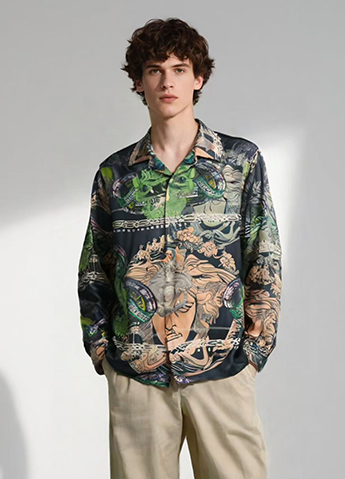
An honest shirt review should separate visible design observations from verified product measurements. The supplied image shows the Meninthemirror styling direction, but it does not provide confirmed fiber content, finished-garment measurements, fabric weight, shrinkage data, or laboratory durability results. Those details should not be invented. The following test process is therefore designed to produce repeatable results when a physical sample is available.
For a useful comparison, measurements should be taken with the shirt laid flat and smoothed without stretching. Measure the half-chest from armpit to armpit, then double it. Measure the shoulder from seam to seam, and measure the sleeve from the shoulder seam to the cuff edge. This avoids the common mistake of comparing a garment’s half-chest measurement with a person’s full chest circumference.
The mobility test should take approximately 10 to 15 minutes and include ordinary movements rather than exaggerated poses:
| Test | What to observe | Acceptable result |
|---|---|---|
| Arms forward | Pulling across the upper back or chest | No button stress and no sharp restriction |
| Reach overhead | Hem lift and underarm tension | Moderate hem lift with no armhole pinching |
| Elbows bent at 90 degrees | Sleeve tightness and cuff pressure | Free elbow movement without sleeve distortion |
| Seated posture | Collar compression and waist bunching | Collar remains comfortable and placket stays aligned |
| Torso rotation | Side-seam drag and back-panel tension | Shirt follows the torso without twisting strongly |
In menswear, drop describes the relationship between the chest and waist measurements. A shirt with a larger chest and smaller waist has a more shaped drop. A straighter shirt has less difference between chest and waist. Neither is automatically better; the correct choice depends on the wearer’s torso.
A useful starting point is to measure the wearer’s full chest and waist, then compare them with the garment’s finished measurements. For example, a wearer with a 104 cm chest and a 96 cm waist may need roughly 10 to 14 cm of total chest ease for relaxed movement, depending on fabric stretch and intended styling. That would place the shirt’s finished chest near 114 to 118 cm. The waist should still allow sitting and bending without buttons pulling.
These numbers are fitting guidelines, not universal rules. A lightweight stretch fabric may need less ease than a rigid woven fabric. A shirt intended for layering needs more room than a close-fitting summer shirt. Buyers should also allow for measurement tolerance because mass-produced garments can vary by approximately 1 to 2 cm between pieces.
The most important distinction is between visual looseness and functional ease. A boxy shirt may look relaxed but still have a narrow armhole. Conversely, a shirt with a moderate silhouette can move well if the armhole, sleeve pitch, and back width are properly proportioned.
The collar is the first contact point, so discomfort is noticeable within minutes. A leisure collar should sit around the neck without pressing into the throat when the wearer looks down. When worn open, the collar should frame the face rather than collapse completely into the placket.
The collar stand is the vertical section that lifts the collar away from the neckline. A low collar stand creates a softer, more casual appearance. A higher stand gives more structure but can feel restrictive, particularly for wearers with a thicker neck or sensitive skin.
To test the opening, place two fingers between the closed collar and the neck. This is not a strict sizing law, but it is a practical comfort check. If one finger barely fits, the collar may feel tight during seated work. If four fingers fit easily and the collar slides around, the neck opening may be too generous for a polished appearance.
For an open-collar look, inspect the first button position. If the first button is too high, the shirt may look formal even when unbuttoned. If it is too low, the front may spread during movement. The best position depends on the wearer’s neck length, chest shape, and preferred level of exposure.
Mobility is controlled by several connected areas: armhole depth, back width, sleeve pitch, upper-arm circumference, and cuff opening. A single measurement cannot predict performance.
A practical mobility score can be calculated by rating each movement from 1 to 5, then averaging the results. A score of 4 or above suggests good everyday mobility for the tested wearer. This is not a medical or laboratory standard; it is a transparent way to compare shirts using the same person and the same movements.
Fabric composition affects fit after washing. Cotton can shrink if exposed to high heat, while polyester generally retains dimensions more consistently but may hold odor more readily. Blended fabrics can balance recovery and comfort, but the actual result depends on fiber percentages, weave, finishing, and care instructions.
To measure shrinkage, record the pre-wash back length, chest width, and sleeve length. Wash according to the label, dry using the stated method, and measure again after the garment has returned to room temperature. The shrinkage percentage is:
Shrinkage (%) = (original measurement − post-wash measurement) ÷ original measurement × 100
For example, a 74 cm back length that becomes 72.5 cm has shrunk by approximately 2.0%. One wash does not predict every future wash, but it identifies whether the shirt has enough length reserve for the wearer’s needs.
Ease of use also includes ironing and drying time. A shirt that remains wearable after a short hang-dry period may suit travel better than one that requires pressing after every wash. However, drying time should be measured under stated conditions rather than described with unsupported claims such as “quick-drying.”
| Fit type | Strength | Common limitation | Best suited to |
|---|---|---|---|
| Leisure collar relaxed fit | Comfortable styling and useful torso ease | May look loose at the waist | Travel, casual offices, weekend wear |
| Traditional dress-shirt fit | Sharper collar and cleaner tucking | Less forgiving across the upper back | Formal work and tailored outfits |
| Oversized boxy fit | High visual freedom and strong streetwear shape | Can have excess fabric and shorter-looking sleeves | Layered casual outfits |
| Stretch performance shirt | Good recovery during movement | May appear more technical than relaxed | Commuting and active daily use |
Compared with a traditional dress shirt, the Meninthemirror leisure collar direction is more appropriate for users who value a softer collar opening and less formal styling. Compared with an oversized boxy shirt, it should be judged by whether the shoulder and sleeve remain controlled rather than simply by how loose the body appears. Compared with a stretch performance shirt, the key question is whether the fabric and pattern provide mobility without creating a sporty visual effect.
Because no verified customer testimonial or independent laboratory report was supplied with this review, the following is a controlled fitting case rather than a claimed customer result. It demonstrates how a buyer can make a decision without relying on vague descriptions.
A wearer measuring 178 cm in height, 104 cm around the chest, and 96 cm around the waist begins with the size recommended by the seller. The wearer first checks the shirt over a thin T-shirt, then performs the forward-reach, overhead, seated, and torso-rotation tests.
This case highlights why chest size alone is insufficient. The final choice should combine collar comfort, shoulder placement, torso drop, sleeve mobility, and intended layering.
The following rating is a provisional design-and-fit assessment based on the available styling reference and the evaluation criteria above. Fabric durability, shrinkage, colorfastness, and seam strength remain unscored until a physical garment is measured and washed.
| Category | Provisional rating | Reason |
|---|---|---|
| Casual versatility | 4.3/5 | The leisure collar format works with denim, chinos, and relaxed tailoring. |
| Neck comfort potential | 4.0/5 | The open-collar concept should reduce tie-like pressure, subject to the actual collar measurement. |
| Mobility potential | 3.8/5 | Final performance depends on armhole depth, back width, sleeve pitch, and fabric recovery. |
| Fit adaptability | 4.0/5 | A relaxed cut can accommodate moderate body variation, but broad-shouldered wearers must verify shoulder and upper-arm measurements. |
| Verified durability | Not scored | No confirmed fabric composition, wash-test data, or seam-strength results were provided. |
The strongest reason to consider a leisure collar shirt is not a vague promise of comfort; it is the combination of a stable collar, balanced drop, correctly placed shoulder seam, and enough armhole mobility for daily movement. Before ordering, compare your body measurements with the garment’s finished measurements, allow for fabric behavior after washing, and test the shirt while seated as well as standing. For buyers seeking a leisure collar long sleeve shirt for men, evaluate the collar stand, shoulder seam position, and armhole mobility together. That approach is more reliable than choosing by chest size alone, especially when searching for a relaxed collar shirt for broad shoulders or a casual long sleeve shirt with easy mobility.
Latest News
Leisure Collar Shirt Fit Review: Balance, Drop, and Mobility
When a customer needs a leisure collar shirt supplier for office-casual wear, travel, or weekend use, the real problem is rarely color alone: the shirt must fit the neck without choking, sit cleanly across the shoulders, and allow reaching without pulling at the buttons. This review examines a leisure collar long sleeve shirt for men through three practical measures—collar stand, shoulder seam
Jan. 01, 1970
Pros and Cons of Baroque Prints for Premium Men's Collections
A custom baroque shirt manufacturer has to solve more than a visual brief: buyers need custom baroque print shirts for premium men’s collections that look distinctive without becoming difficult to wear, while brands need private-label baroque shirts for men with repeatable quality and luxury custom baroque shirts that survive production and retail handling. Baroque and rococo motifs, silk
Jan. 01, 1970
Top Packaging Details to Confirm for Export Shirt Orders
For an export shirt supplier, packaging is no longer a final warehouse task; it is part of the buyer’s quality specification. Retailers now expect custom export shirt packaging to protect collars, control freight volume, and meet destination-market rules, while a wholesale shirt packaging requirements checklist helps prevent chargebacks and customs delays. Before approving a purchase order,
Jan. 01, 1970
Let's Take This Forward!
Feel free to reach out for any queries. We would be happy to help!

