





Jan. 01, 1970
For buyers researching digital printing clothing in China, the central question is not simply whether cotton or polyester is better. The right choice depends on print technology, image requirements, fabric behavior, garment purpose, washing conditions, budget, and the expected production volume. The most useful information for this topic combines fabric science with real production experience, clear parameter comparisons, and practical recommendations for different purchasing groups.
Meninthemirror uses this buyer focused approach to compare cotton and polyester shirts for high resolution digital printing. The goal is to help clothing brands, promotional buyers, print shops, and apparel importers avoid common problems such as dull colors, poor wash resistance, fabric shrinkage, unstable sizing, and unexpected production costs.
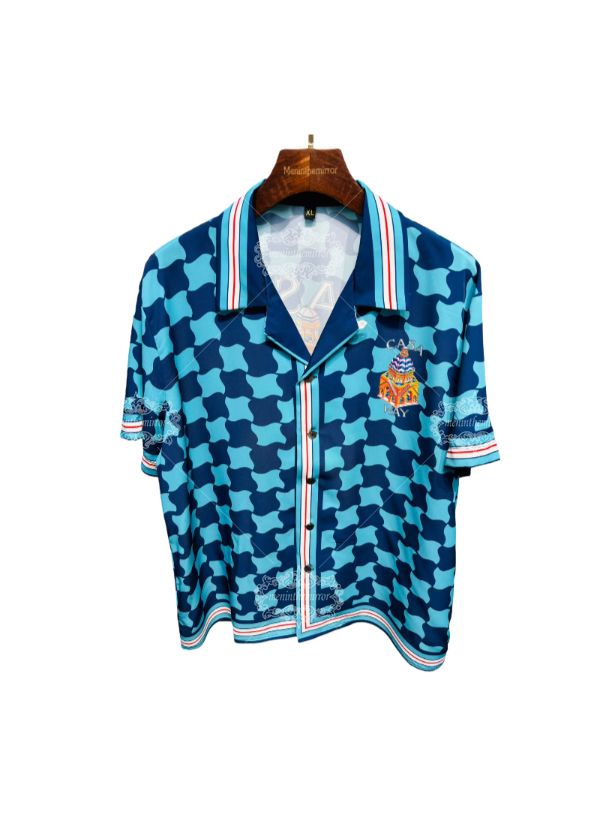
Cotton shirts are made from cellulose fibers that absorb moisture and many types of printing ink. This structure gives cotton a natural hand feel and makes it comfortable for daily wear. It also creates a familiar surface for direct to garment printing, especially when the design needs a soft, matte finish.
However, cotton is not automatically the best choice for every image. Its absorbent surface can cause slight color spread, particularly when the fabric has a loose weave or when pretreatment is inconsistent. Dark cotton also requires careful pretreatment and curing to prevent cracking, fading, or a stiff print area.
Polyester is a synthetic fiber with low moisture absorption and strong dimensional stability. It is widely used for sublimation printing because sublimation dye turns into a gas under heat and bonds with the polyester fiber. The design becomes part of the fabric rather than sitting as a separate layer on top.
The main limitation is that standard sublimation is most effective on white or light colored polyester. Printing a bright design on black polyester often requires a different process, such as direct to film transfer or a specialized pigment system. The printer, ink, transfer paper, heat press settings, and fabric finish must therefore be evaluated together.
| Parameter | Cotton shirt | Polyester shirt | Buying implication |
|---|---|---|---|
| Primary fiber type | Natural cellulose fiber | Synthetic polymer fiber | Fiber type determines ink absorption and heat response. |
| Most suitable process | Direct to garment, direct to film, screen print | Dye sublimation, direct to film, suitable digital pigment systems | Select the printing process before selecting the shirt. |
| Color performance | Rich and soft, with possible absorption into the fabric | Very bright and sharp on light colored fabric | Polyester is usually stronger for saturated sports graphics. |
| Fine detail reproduction | Good when pretreatment and curing are controlled | Excellent with sublimation on a smooth, tightly knitted surface | Surface smoothness matters as much as fiber content. |
| White garment performance | Good with direct to garment or transfer methods | Excellent for sublimation | White polyester is a strong option for full coverage designs. |
| Dark garment performance | Good with white ink and correct pretreatment | Limited with standard sublimation | Dark polyester may need transfer printing or another process. |
| Hand feel | Natural, breathable, and generally soft | Smooth, light, and sometimes more technical | Fabric finish and print thickness affect comfort. |
| Dimensional stability | Moderate; shrinkage depends on construction and finishing | High when heat setting is properly controlled | Polyester is easier to standardize for repeat orders. |
| Moisture management | Absorbs perspiration but dries more slowly | Wicks moisture and dries quickly when engineered correctly | Polyester is generally better for active use. |
| Wash durability | Good when ink is properly cured | Very good with sublimation because dye bonds with the fiber | Wash testing is still required for both fabrics. |
| Production consistency | Can vary with weave, pretreatment, and cotton quality | Usually stable after heat setting and process calibration | Polyester often simplifies large repeat programs. |
| Typical product use | Casualwear, fashion merchandise, retail basics | Sportswear, uniforms, promotional shirts, event apparel | Choose according to the wearing environment, not only the image. |
Fiber content alone does not determine print quality. A lightweight cotton jersey may absorb ink differently from a dense combed cotton shirt. A low quality polyester knit may show texture, shine, or uneven heat transfer even when the fiber percentage is correct.
For high resolution images, a smooth and tightly knitted surface generally produces cleaner edges. A textured fabric can make small text and thin lines appear less precise, even if the printer itself has a high nominal resolution.
In practical use, cotton shirts usually feel more natural against the skin. The fabric absorbs perspiration, reduces the slick feeling associated with some synthetic materials, and suits casual environments. When printed with a properly calibrated direct to garment system, the image can remain flexible and comfortable.
The main user experience issue is that cotton absorbs moisture and dries slowly. After repeated washing, poorly cured prints may fade, crack, or develop a rough surface. Dark cotton also tends to require a thicker white ink base, which can reduce softness if the print shop applies too much ink.
Polyester shirts are often more reliable for active use because they dry quickly and retain their shape. Sublimated designs normally remain flexible because there is no thick ink film on top of the fabric. This is especially useful for large graphics that cover the front, back, sleeves, or entire garment.
In actual use, polyester can feel warmer or smoother than cotton depending on the knit and finishing treatment. Some lower quality polyester fabrics may hold odor or feel less breathable. Buyers should therefore test not only the printed image but also the shirt after exercise, repeated washing, and extended wear.
Neither cotton nor polyester guarantees stable results without process control. Cotton printing depends heavily on pretreatment volume, drying, white ink circulation, printhead condition, platen pressure, and curing temperature. Polyester sublimation depends on transfer time, pressure, temperature, paper quality, fabric tension, and alignment.
There is no battery life requirement for a shirt, but the closest production equivalent is operating stability. A dependable supplier should maintain stable color, registration, size, and hand feel across repeated batches. Buyers should ask for process records and compare samples from the first and last production pieces.
Direct to garment printing places ink directly onto the shirt. It is particularly effective for cotton and cotton rich fabrics because the ink is designed to bond with the fiber surface. The process is suitable for photographic artwork, gradients, illustrations, and small batch customization.
Dye sublimation transfers color into polyester through heat. It is highly effective for all over designs because the print does not create a heavy surface layer. The method is commonly selected for teamwear, cycling shirts, running shirts, uniforms, and event garments.
Direct to film printing transfers a printed design from a film carrier onto the garment using adhesive powder and heat. It can work on cotton, polyester, and blends, making it useful when a buyer needs one artwork across several shirt colors and fabric types.
The tradeoff is that direct to film normally creates a more noticeable print layer than sublimation. The result can still be durable and attractive, but buyers should evaluate stretch, wash resistance, breathability, and hand feel before approving a large order.
The lowest blank shirt price does not always produce the lowest finished garment cost. Cotton may require pretreatment, additional white ink, longer curing, and more handling on dark garments. Polyester sublimation may reduce surface printing steps but can require special transfer paper, a heat press, or a calendar press.
For small customized orders, direct to garment or direct to film can be economical because the artwork can be changed without creating screens or large setup quantities. For large orders with repeated designs, sublimation or other optimized transfer processes may provide more consistent output and lower unit costs.
Buyers should request a complete quotation based on the actual artwork, shirt color, size range, quantity, packaging, and inspection standard. A price based only on a plain white sample can be misleading when the final order includes dark garments, full coverage designs, or multiple sizes.
A high quality print cannot compensate for poor garment construction. Start by checking the blank shirt, because uneven fabric, twisted seams, and inconsistent sizing can create problems during both printing and final sale.
High resolution printing should be evaluated at both close range and normal wearing distance. A print may look sharp under magnification but appear dull, banded, or poorly positioned when worn. Buyers should inspect gradients, small text, skin tones, solid color blocks, and fine outlines.
A visual inspection immediately after printing is not enough. The most common purchasing pain point is discovering that the garment looks attractive at delivery but fades, cracks, shrinks, or changes shape after customers wash it.
Cotton is usually the better choice when the product is positioned as comfortable, natural, casual, or premium. It suits brands that sell graphic tees, artist merchandise, streetwear basics, family apparel, and everyday promotional clothing.
Polyester is generally more suitable for sports teams, fitness companies, event organizers, school uniforms, workwear programs, and brands that need fast drying performance. It is also a strong option for all over designs with bright colors and repeated production.
Cotton polyester blends can balance softness, durability, and shape retention, but they require careful process selection. A blend may not accept sublimation as vividly as pure polyester and may not absorb direct to garment ink like pure cotton. The exact fiber ratio and surface finish should be confirmed before production.
Blends are useful for buyers who want a more stable shirt than pure cotton but a softer feel than technical polyester. They should always be tested with the final artwork because the same percentage blend can print differently across suppliers.
Choose cotton when comfort, natural hand feel, and lifestyle appeal are more important than rapid drying or maximum color saturation. It is especially effective for direct to garment printing on casual shirts, fashion merchandise, and small batch personalized products.
Choose polyester when the product needs strong color, fast drying, low shrinkage, and stable repeat production. It is particularly effective for white or light sportswear, uniforms, event apparel, and large all over digital prints.
For a soft cotton graphic shirt, use a suitable direct to garment or transfer process and control pretreatment and curing carefully. For a bright full coverage polyester shirt, use sublimation with calibrated heat and pressure. For dark garments or mixed fiber programs, evaluate direct to film or another compatible process through a complete sample and wash test.
In conclusion, cotton and polyester are both strong choices for high resolution digital printing, but they solve different purchasing problems. Cotton offers comfort and a natural appearance, while polyester offers color intensity, drying speed, shape stability, and reliable performance for demanding use. Buyers of digital printing clothing in China should compare the complete system of fabric, artwork, printer, ink, curing, inspection, and after wash behavior rather than choosing only by unit price.
Meninthemirror can help buyers evaluate the right shirt construction and printing direction for their target market. A carefully tested sample, a clear production standard, and a fabric choice based on real use will create a more dependable result than relying on a catalog photograph or a general claim about print quality.
Latest News

Placement Print vs All-Over Print for Men's Graphic Shirts
Choosing between a placement print and an all-over design becomes difficult when a shopper is comparing the best placement print graphic shirts for men, all-over print men's shirts for streetwear, or a custom stylish printed shirt for men. A reliable men's graphic shirt supplier must explain more than appearance: screen printing affects ink thickness, sublimation printing affects color
Jan. 01, 1970

Stock Fabric vs Custom-Dyed Fabric for Private Label T-Shirts
For a t shirt manufacturer private label project, the choice between stock fabric and custom-dyed fabric affects more than color. It influences minimum order quantity, production speed, shade consistency, fabric performance, cash flow, and the success of future reorders. Meninthemirror helps brands evaluate these factors before committing to a fabric program.
Jan. 01, 1970
Top Collar Construction Details for Men's Leisure Shirts
Today’s leisure shirt manufacturer is designing for more than appearance: men want a collar that stays balanced during commuting, relaxed office work, travel, and weekend dining. The most useful buying terms include men’s casual button-down shirts, best collar styles for men’s leisure shirts, and custom men’s resort shirts. Behind these details are the LSI concepts of smart-casual
Jan. 01, 1970
Let's Take This Forward!
Feel free to reach out for any queries. We would be happy to help!

