




NEWS
Oct. 14, 2025
Share
Africa’s fashion landscape is rapidly evolving: expanding e-commerce, rising youth demographics, and an energetic designer scene are together creating substantial opportunity — and real challenges — for apparel suppliers. Recent coverage shows global e-commerce entrants quickly gaining market share while local designers and sustainable initiatives push for higher-quality, culturally resonant products.
The market dynamics are complex. International fast-fashion platforms have disrupted price points and distribution, increasing competition for local retail, yet there is growing consumer interest in sustainably produced garments and African-designed lines. Events such as Nairobi Fashion Week highlight a push toward circularity and locally-made, ethically sourced fashion — signals that consumers and buyers increasingly value provenance and sustainability credentials.
For distributors, brands, and regional partners, the present window favors suppliers who can offer: (1) cost-effective, quality-controlled fabrics and constructions; (2) flexible MOQ options for market tests; and (3) co-branding or OEM solutions that elevate perceived value without excessive cost. Additionally, firms that can support upcycling, waste reduction, or traceability measures gain credibility with buyers and events promoting sustainable fashion.
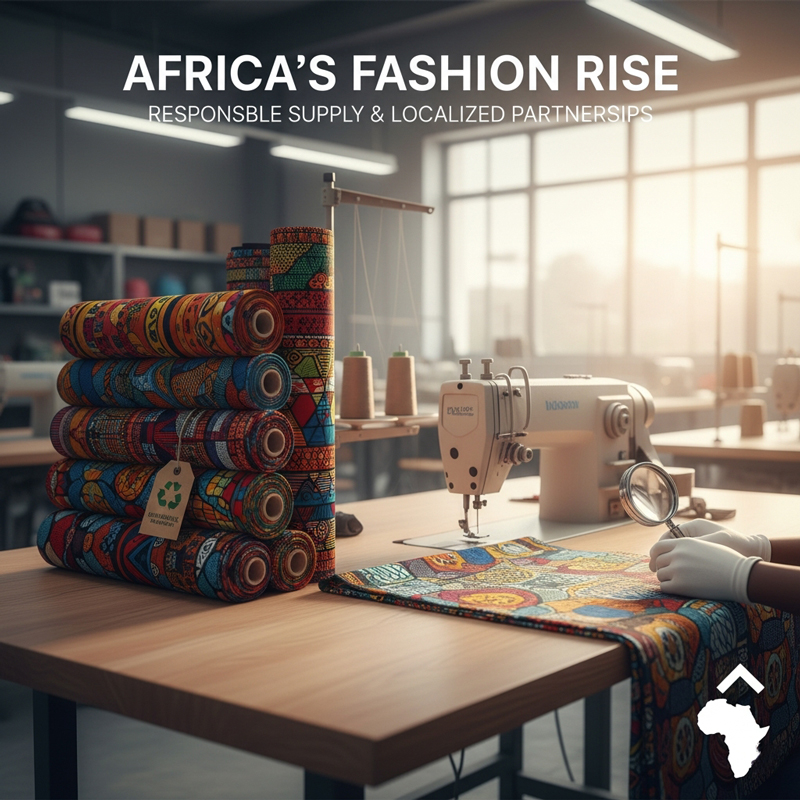
Practically, African distributors seeking to scale are choosing partners who combine technical capability (consistent finishing, colorfast printing, and durable construction) with logistical reliability. Fast, small-batch sampling that enables retailers and distributors to test designs locally — followed by smooth replenishment — is a recurring purchasing pattern. Where brands wish to differentiate, ODM-led collections adjusted for African sizing, climate, and style preferences, paired with OEM-labeled packaging, perform well.
Sustainability is both a challenge and a differentiator. Africa bears much of the world’s second-hand clothing influx and garment waste; local initiatives to upcycle and prioritize durable, repairable garments are gaining traction. Suppliers who can document the source of materials, demonstrate testing (colorfastness, durability), and offer eco-friendly fabric alternatives (recycled fibers, low-impact dyeing) are better placed in procurement conversations and at local showcases that attract wholesale buyers.
Key sources / recommended reads & media:
Market size & trend overview — Africa fashion statistics.
E-commerce disruption (Shein/Temu) — Reuters coverage of South Africa.
Sustainability & Nairobi Fashion Week reporting — The Guardian.
UNESCO / industry growth commentary — AP / UNESCO reporting.
Local upcycling & waste issues — Time feature on fast-fashion waste.
Latest News
Tips for Choosing the Right Men's Shirt Manufacturer
Choosing the right men's shirt manufacturer is one of the most important decisions for fashion brands, wholesalers, retailers, and private label businesses.
Jul. 28, 2026
Print Shirt Size Guide: US, EU and Asian Size Comparison
Finding the right print shirt size is just as important as choosing the right design. Size standards vary across countries and brands, which can make online purchasing challenging—especially for international buyers. A shirt labeled "L" in Asia may fit differently from a US or EU "L.
Jul. 17, 2026
How To Start Private Label Clothing Brand?
A private label clothing brand is a fashion business model where a company creates its own clothing designs and sells products under its own brand name, while production is handled by a professional manufacturer.
Jul. 10, 2026
Let's Take This Forward!
Feel free to reach out for any queries. We would be happy to help!


